


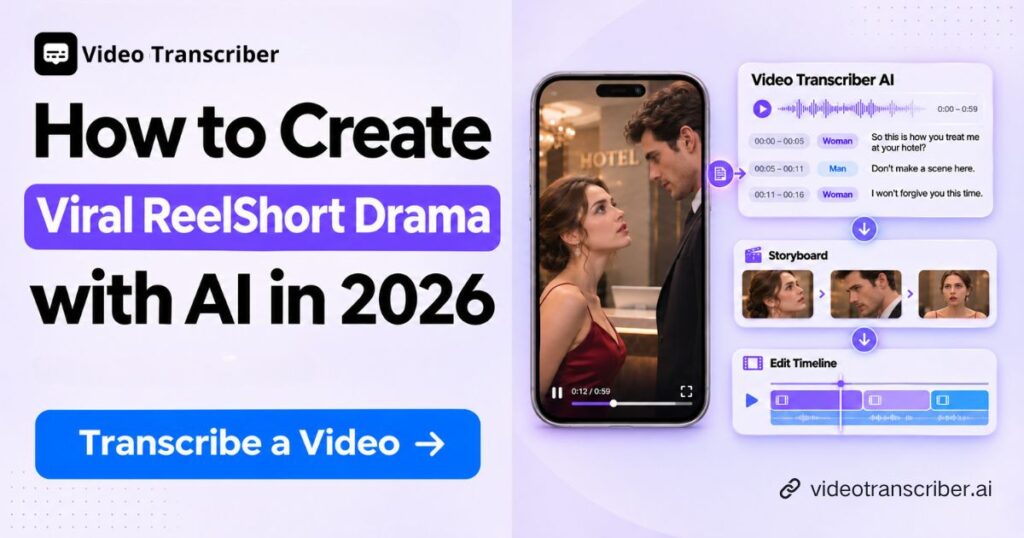
A ReelShort episode often lasts a minute or two, yet it can leave a viewer humiliated, vindicated, and desperate for the next episode before the screen goes dark. That compression explains why ReelShort and other vertical drama apps have become a real opportunity for independent creators, and why people searching for reel shorts now want to know how to create ReelShort videos of their own.
The old answer required a scriptwriter, actors, a camera crew, and an editor. The 2026 answer is an AI filmmaking workflow: study how a viral ReelShort drama is built, transcribe video to text, extract its structure, write an original script, generate scenes, and edit for mobile.
This guide treats a ReelShort drama as an engineered schedule of information rather than a lucky premise. You will see how Video Transcriber AI, Claude, Seedance, and CapCut fit into one pipeline, and why the transcript is the piece that makes every other AI drama generator step work.
Why Is ReelShort Drama So Addictive?
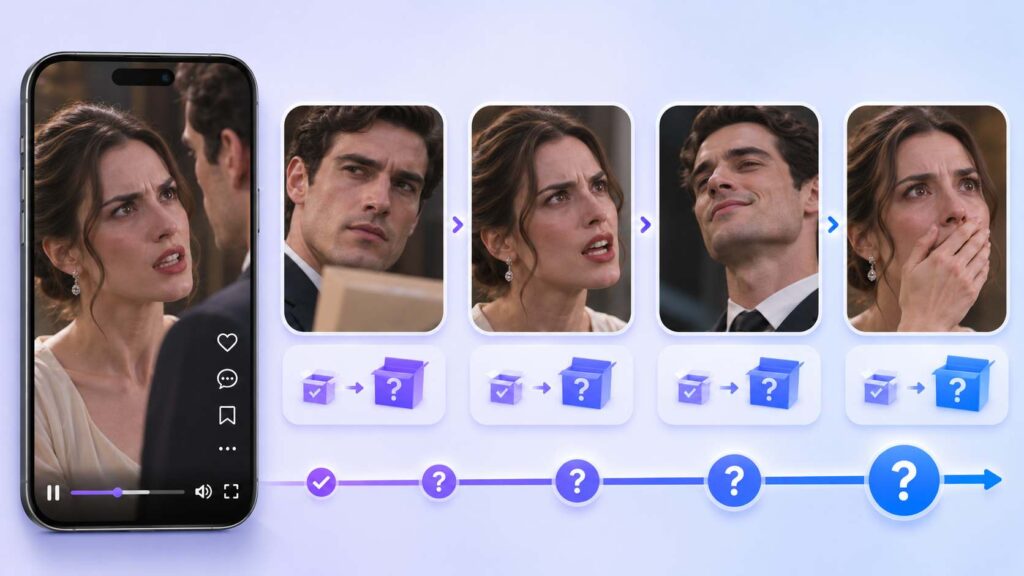
Conventional television lets viewers settle in. A ReelShort drama does the opposite. Conflict arrives early, episodes end before the central tension resolves, and each cliffhanger promises that the next minute will answer the question you are holding right now.
Popular ReelShort drama genres include billionaire romance, revenge, secret identity, family conflict, fantasy relationships, and unexpected reunions. The themes differ, but the engine underneath is shared.
The Real Engine: Controlled Information Release
Here is a view worth testing: a viral ReelShort drama is defined less by a surprising premise than by when the audience learns things. Every strong ReelShort scene answers one small question and opens a bigger one. ReelShort viewers stay because they are holding an unresolved question and trust the next episode to pay it off.
That explains the techniques that keep appearing in ReelShort-style stories:
- Immediate hooks: Place a betrayal, confrontation, or mystery in the opening seconds.
- Dramatic irony: Let the audience know a secret the antagonist does not.
- Fast dialogue: Every line either reveals information or shifts a relationship.
- Reversals: Hidden identities and revelations change who holds power.
- Cliffhangers: End on a question, never an answer.
- Visual emphasis: Close-ups and reactions carry emotion that words cannot.
Consider one opening: a wealthy businessman publicly humiliates a waitress, unaware that she secretly owns the restaurant. In one sentence the viewer has the conflict, the irony, and the promised payoff. That structure is the lesson, not the characters.
Learning from ReelShort never means copying characters, dialogue, or scenes. The goal is to understand the technique and apply it to original ideas.
Step 1: Build a ReelShort Reference Library
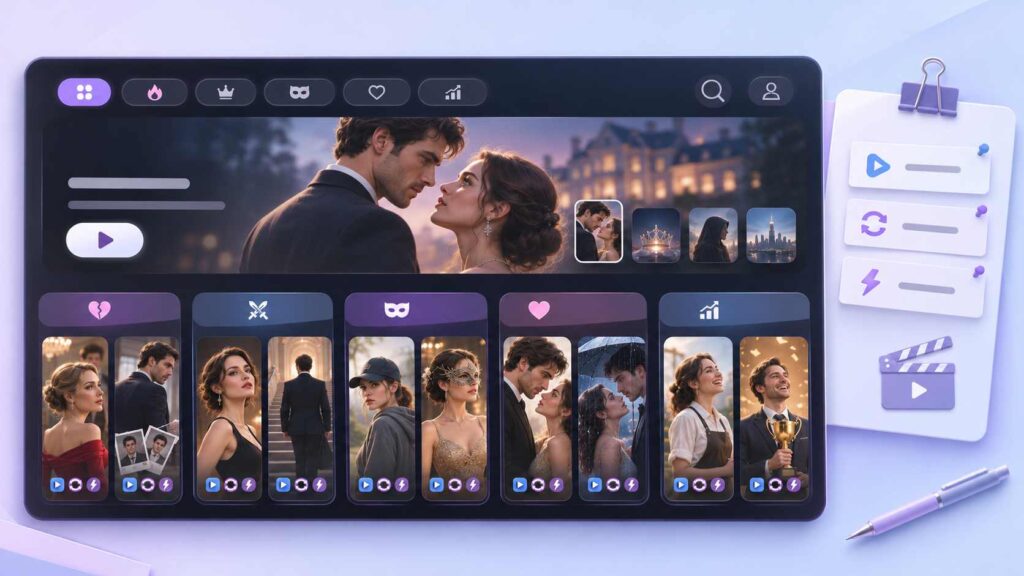
Before writing a ReelShort script, collect ReelShort examples with a purpose. A random folder of popular clips teaches little, while a library organized by storytelling pattern teaches a lot.
Where to Find ReelShort-Style References
| Platform | What to Study |
| ReelShort | Vertical drama formats, emotional hooks, cliffhangers, and episode structures |
| YouTube | Short drama compilations, storytelling breakdowns, and filmmaking tutorials |
| TikTok | Attention-grabbing openings and rapid scene development |
| Dailymotion | Short films and alternative storytelling styles |
| Netflix | Character development, cinematography, and longer-form structure |
ReelShort shows the pacing of vertical romance, while YouTube and Netflix add perspective on visual storytelling and character development. Distinguish between watching a video for inspiration and obtaining media for processing. Use publicly accessible content, permitted downloads, or media you own or are authorized to analyze, because direct transcription availability depends on the platform and access method.
What to Look for in a ReelShort Video
Judge each ReelShort video by its storytelling decisions, not its view count:
- What happens in the first five seconds?
- How quickly does the main conflict appear?
- What does each conversation reveal?
- How often does the emotional direction change?
- Which unanswered question makes viewers continue?
A useful library holds about ten ReelShort dramas covering betrayal, revenge, hidden identity, forbidden romance, and unexpected success. Variety keeps you from leaning on any single story.
Step 2: Transcribe Video to Text and Analyze the ReelShort Script
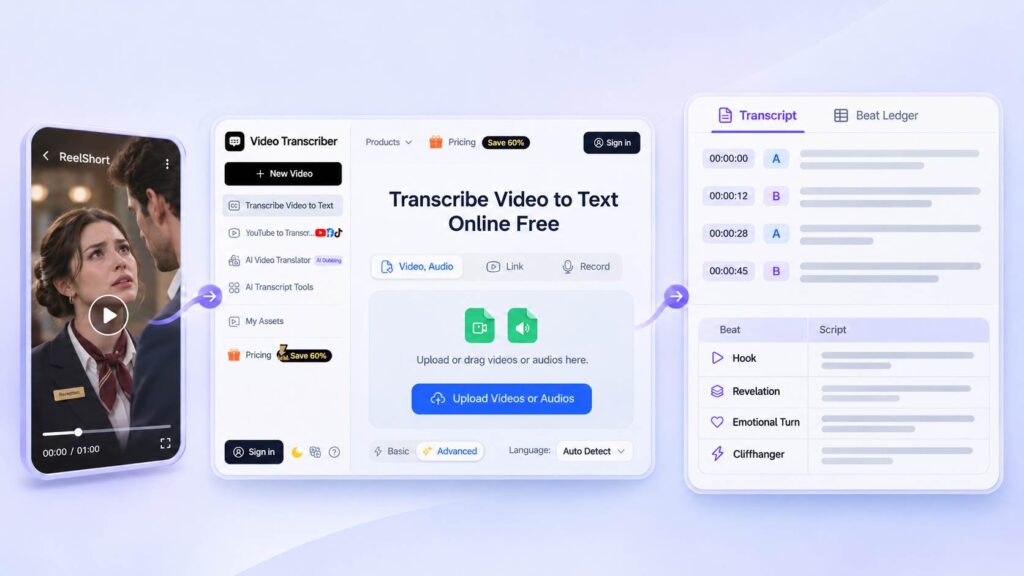
Here is the central argument of this workflow: a text model cannot watch a video, but it can read a transcript. Transcription is what turns a ReelShort episode into a document an LLM can read, compare, and measure. That makes AI video transcription the foundation of the pipeline, not a side task.
Transcribe Video to Text with Video Transcriber AI
Video Transcriber AI accepts local audio and video uploads, supported public video links, Google Drive, Dropbox, and online recordings. You can transcribe eligible public YouTube or TikTok videos, or upload an authorized MP4 for analysis.
- Upload a video or paste a supported public link.
- Choose transcription settings or use automatic language detection.
- Generate a transcript with timestamps and speaker identification where available.
- Review the text and correct recognition errors.
- Export as TXT, DOC, SRT, VTT, or CSV, depending on the next step.
Support for more than 200 languages helps when you study dialogue across markets. Timestamps let you locate key revelations, and speaker labels separate characters during arguments, which matters most in a ReelShort drama built on confrontations.
Turn ReelShort Transcripts into a Beat Ledger
A ReelShort transcript becomes far more useful when you convert it into a beat ledger. Each row records a timestamp, the speaker, what the audience learns, and what new question opens. Video Transcriber AI offers AI Summary and AI Chat features that help organize long transcripts and answer questions about them, and you can also paste the text into any LLM.
Try this prompt:
Analyze this ReelShort transcript as a beat ledger. For each key moment, list the timestamp, speaker, what the viewer learns, and the new question created. Then identify the opening hook, central conflict, emotional turning points, and cliffhanger.
| Story Element | What to Analyze | Creative Application |
| Opening hook | First conflict or unexpected statement | Create immediate curiosity |
| Dialogue | Speech patterns and emotional shifts | Build distinct character voices |
| Plot progression | Order of revelations | Escalate tension scene by scene |
| Reversal | Moments when power changes | Place meaningful plot twists |
| Cliffhanger | Final unanswered question | Drive viewers to the next episode |
You may find that a tense confrontation contains very little dialogue, with the pressure coming from one revelation and a brief reply. That insight can shape your own writing.
One limit matters here: a transcript captures speech and timing, not the visual language of a scene. Add a column for camera angle, expression, and framing, and fill it by watching the original video. Transcript analysis plus visual notes gives the full picture of ReelShort storytelling.
Step 3: Write an Original ReelShort Script with AI
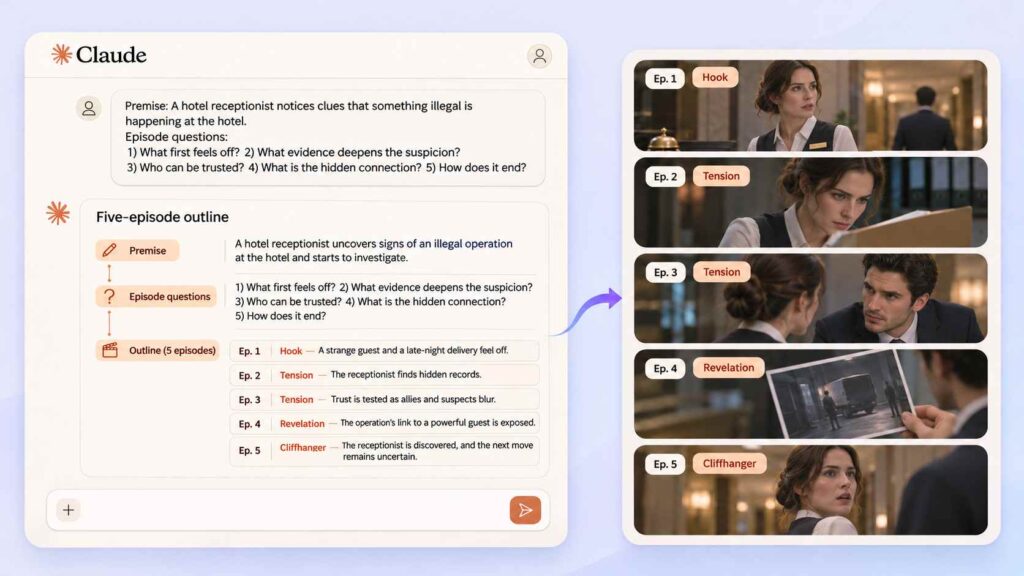
After analyzing several ReelShort dramas, turn the observations into an original story. Claude can brainstorm ReelShort relationships, organize structure, draft dialogue, and revise scenes, but creative direction stays with you. Apply storytelling principles without reproducing the distinctive expression of existing works.
Write the ReelShort Question Chain Before the Dialogue
A practical way to write a short drama script is to list the questions the viewer should hold at the end of each episode, then write backward toward them. Dialogue follows the questions, not the other way around.
Start with a simple premise: a struggling hotel receptionist discovers that the mysterious guest she has been helping is investigating her father's disappearance.
Write an original ReelShort-style vertical drama from this premise. Create three characters with distinct motivations and outline five short episodes. For each episode, state the question the viewer should hold at the end, then provide an opening hook, escalating tension, a revelation, and a cliffhanger. Avoid copying existing stories or recognizable characters.
When reviewing the ReelShort script, check that characters make believable decisions and that conflicts advance the story. A twist works only when it connects to what came before.
Turn the ReelShort Script into a Storyboard
A usable ReelShort storyboard records what characters say and what viewers see and hear.
| Scene | Dialogue or Action | Visual Direction |
| 1 | A receptionist discovers an anonymous letter | Close-up of the letter |
| 2 | A guest asks about her missing father | Medium shot with tense eye contact |
| 3 | She notices a familiar photograph in his wallet | Insert shot, then a reaction |
| 4 | The guest whispers, \"He may still be alive.\" | Slow close-up on her expression |
For every ReelShort scene, favor recognizable emotions, simple scene geography, and clear transitions. One real revelation with a strong reaction beats an elaborate scene full of unnecessary dialogue.
Step 4: Generate Scenes with an AI Drama Generator
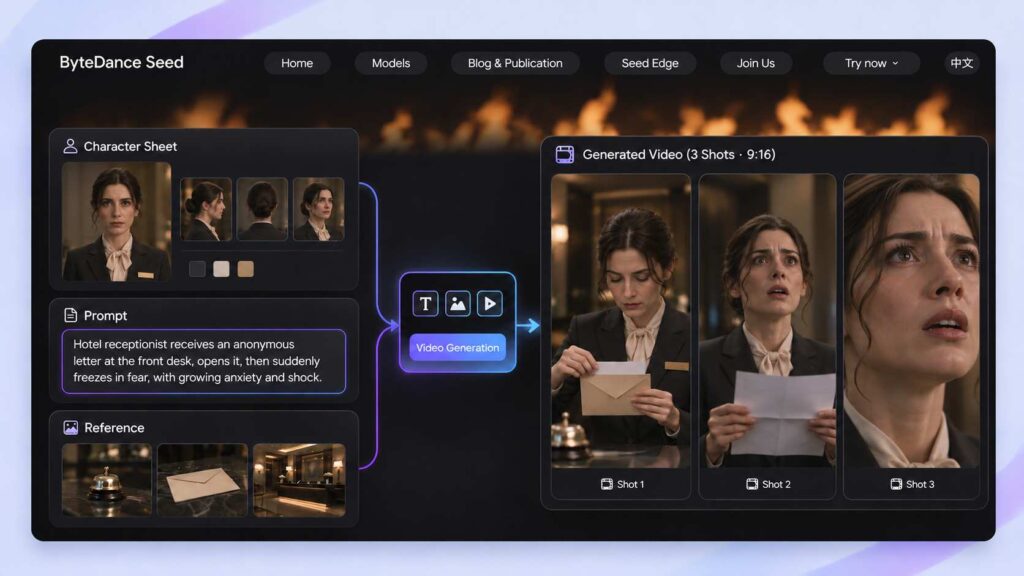
AI video tools reduce the equipment and production work a ReelShort drama needs, but consistent characters and believable emotion still demand planning.
Lock the ReelShort Visual Identity First
Create a character sheet covering appearance, hairstyle, clothing, personality, and distinguishing features. Define lighting, locations, color palette, and framing too. A ReelShort mystery romance might use cool nighttime lighting, modern interiors, and tight close-ups. Reference images and repeated visual descriptions reduce appearance drift between scenes generated separately.
Generate ReelShort Clips with Seedance
Seedance turns instructions and reference materials into video sequences, and its multimodal generation supports text, images, and other assets, though features vary by model version and platform.
Vertical cinematic ReelShort-style drama, 9:16 composition. A young hotel receptionist stands behind a modern reception desk at night. She opens an anonymous letter and freezes. The camera slowly moves toward her face, capturing fear and disbelief. Realistic lighting, subtle emotion, suspenseful atmosphere.
Generate the opening hook and the major reversal first. Check each result for character consistency, natural movement, and continuity, and revise the prompt or reference image rather than accepting the first output. Review generated dialogue, audio quality, and synchronization before editing.
Step 5: Edit Your ReelShort Drama for Maximum Impact
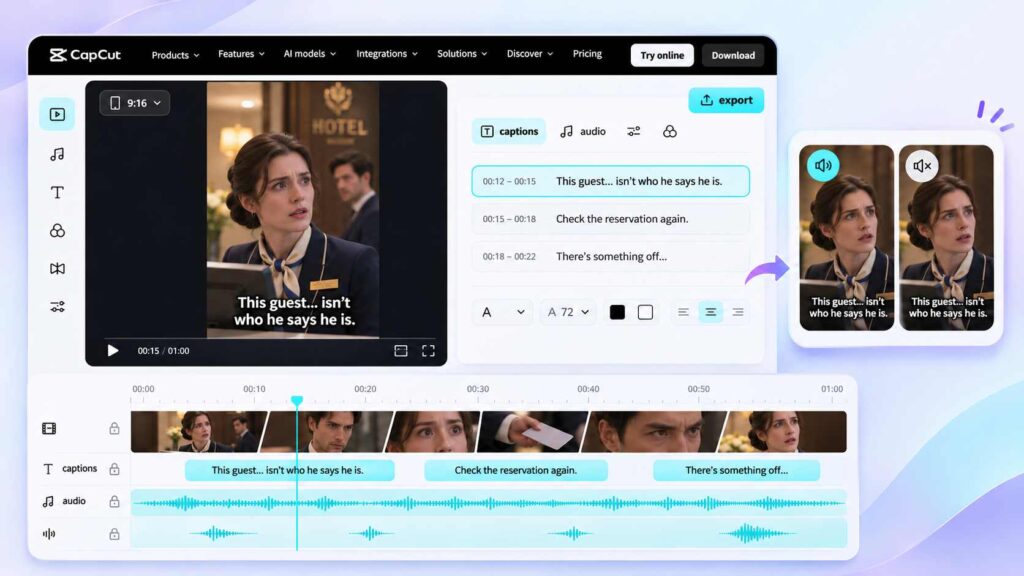
Editing sets the rhythm ReelShort viewers feel. A well-timed reaction shot, a deliberate silence, or an abrupt cut can change the emotional impact of a scene. CapCut can assemble scenes, adjust pacing, add subtitles and sound effects, and export vertical video.
- Use 9:16 framing for mobile viewing.
- Open on the conflict, not an introduction.
- Cut unnecessary pauses while keeping emotional realism.
- Add readable subtitles for small screens.
- Use sound deliberately, so music and effects support the story.
- End on a revelation, a hard choice, or an open conflict.
Try the mute test: watch the finished ReelShort drama without sound. If viewers still identify the emotional beats from expressions and framing, the visual storytelling works. Then watch with audio to check dialogue clarity, music balance, and subtitle timing. Many cuts do not make a drama engaging. The strongest edits help viewers understand the characters and their conflicts.
Bonus: Automate Your ReelShort Research with API, MCP, and Skills
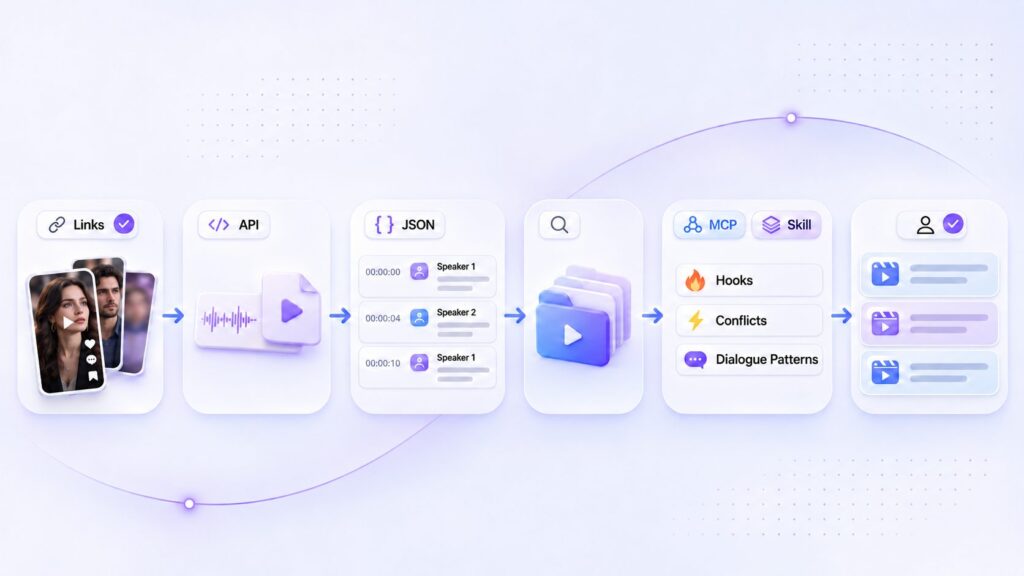
Processing every reference by hand becomes repetitive once you study many ReelShort dramas. The Video Transcriber AI Transcript API offers programmatic transcription for supported public media URLs, including YouTube, TikTok, Instagram, Facebook, X, Bilibili, and accessible cloud or direct links. It returns structured transcripts with timestamps and speaker information.
A research pipeline could:
- Collect authorized public references.
- Submit the URLs to the API.
- Store transcripts in a searchable library.
- Have an AI model classify hooks, conflicts, and dialogue patterns.
- Generate original concepts and production briefs for review.
The API handles transcription, while other AI services handle analysis and generation. You can also expose these steps through Model Context Protocol (MCP) or reusable AI Skills so compatible agents can run them. An agent instruction might read: analyze these five transcripts, identify recurring techniques, and propose three original ReelShort-style concepts with distinct conflicts and cliffhangers. The workflow speeds up research, and script selection stays your decision. Technical details are in the Transcript API documentation.
Conclusion
A viral ReelShort drama needs more than an attention-grabbing premise. It combines emotional storytelling, purposeful dialogue, visual consistency, and controlled pacing, all built around when the audience learns each secret.
AI makes the process accessible. Video Transcriber AI turns ReelShort reference videos into readable data, Claude helps develop the script, Seedance generates scenes, and CapCut finishes the edit. AI cannot guarantee a viral ReelShort hit, but it shortens the path from idea to finished episode.
Learn why successful ReelShort dramas work, then use those insights to create something original. Directing no longer requires a production team. It starts with a story worth telling.