


Medical transcription services no longer serve only clinicians dictating notes. They can also help researchers organize interviews, medical students review lectures, and patients revisit recorded consultations—with permission. Some medical transcription services return instant AI-generated text, while others provide professional human transcription, real-time dictation, or speech-recognition APIs.
The right choice depends on the user. A clinician may need a reviewed report or EHR workflow; a student may want searchable lectures and terminology explanations; a patient may want a plain-language summary and questions to discuss with a doctor. AI can support understanding, but it should not diagnose conditions, provide personalized medical advice, or replace a qualified professional.
This guide compares 10 medical transcription services by delivery model, human review, workflow, turnaround, and published pricing.
What Are Medical Transcription Services?
Medical transcription services convert spoken medical content into written text. Inputs can include physician dictation, consultations, clinical interviews, research recordings, lectures, telehealth sessions, and training videos. Outputs range from raw transcripts to reviewed clinical reports.
AI Self-Service
AI medical transcription services automatically process uploaded or recorded speech. They usually return text quickly and may include timestamps, speaker labels, editing, summaries, and export tools. These online medical transcription services work well for searchable drafts, study notes, and research material when the user can review the result.
Professional Human Transcription
Human medical transcription services use trained transcriptionists to type, format, and check documents. They are generally slower and more expensive than AI, but they offer a managed process and may better suit formal reports.
AI-Assisted Transcription with Human Review
Hybrid medical transcription services create an AI draft and send it through professional validation. Buyers should confirm who reviews the document, what is checked, and whether the review applies to every file.
Real-Time Dictation and APIs
Real-time medical transcription services place words into a clinical application while the speaker dictates. API services provide medical speech recognition that developers can embed in their own products; they do not necessarily include an editor, storage, or human review.
How We Evaluated the Best Medical Transcription Services
We evaluated medical transcription services using providers' published information and compared:
- Delivery model, supported inputs, and output
- Speaker labels, timestamps, editing, and exports
- Human review and reported turnaround
- Public, subscription, usage-based, or quote pricing
- Audience and workflow fit
- Published security information and healthcare agreements
Vendor accuracy claims are not directly comparable because recording conditions and testing methods differ. Medication names, dosages, measurements, dates, speakers, and negative statements should always be checked against the source.
Best Medical Transcription Services: Quick Comparison
| Service | Model | Published Price | Best For |
| Video Transcriber AI | AI self-service | Free; paid from $5/month | Recorded medical audio and video |
| Dragon Medical One | Real-time dictation | Quote required | Clinical dictation at the cursor |
| OVERNIGHTSCRIBE | Human and AI-assisted | Instant Note from $0.40/note | Practices needing multiple service modes |
| Athreon | AI-assisted, human-validated | Custom quote | Managed healthcare documentation |
| Rev | AI or human | $0.25/min AI; $1.99/min human | Flexible delivery options |
| iMedat | Human and virtual scribing | Custom quote | U.S.-based transcription support |
| Sunrise Transcription | AI-assisted, human-reviewed | Custom per-line quote | Reviewed medical reports |
| OutSec Medical | Human-only | From £1.40/audio minute | UK medical and medico-legal work |
| NoteGPT | AI self-service | Pro from $9.99/month | Medical learning and research |
| Amazon Transcribe Medical | Medical ASR API | $0.075/min in pricing examples | Custom voice applications |
1. Video Transcriber AI: Best for Recorded Medical Audio and Video
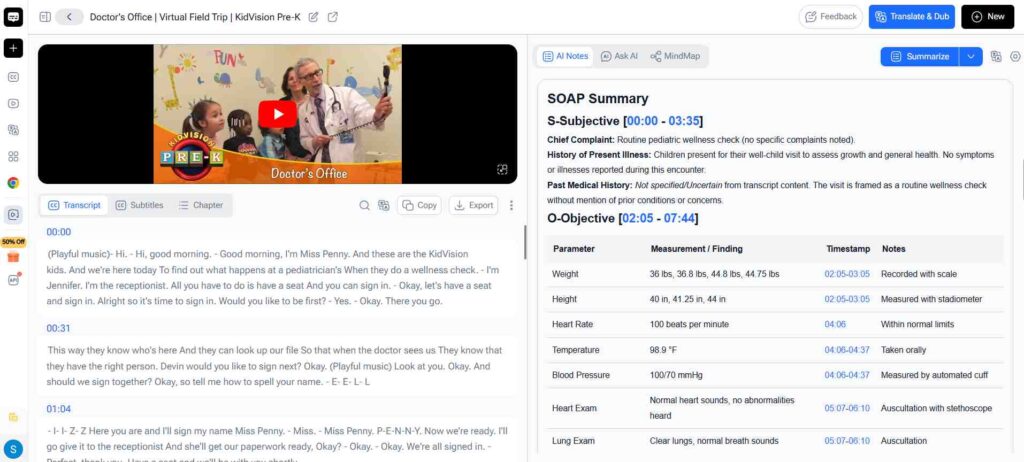
Video Transcriber AI is an upload-first choice among AI medical transcription services. Its browser workflow turns existing medical audio or video into searchable text and supports review, learning, research, and content analysis after transcription.
Key features:
- Audio and video uploads with support for 200+ languages
- Speaker identification and clickable timestamps
- Browser editing, transcript search, and multiple export formats
- AI summaries, custom prompts, chat, and terminology explanations
Best for: Users comparing medical transcription services for authorized recordings: clinicians reviewing conversations, students creating lecture notes, researchers searching interviews, and patients organizing permitted consultations. AI explanations should be treated as educational aids, not diagnoses or medical advice.
2. Dragon Medical One: Best for Real-Time Clinical Dictation
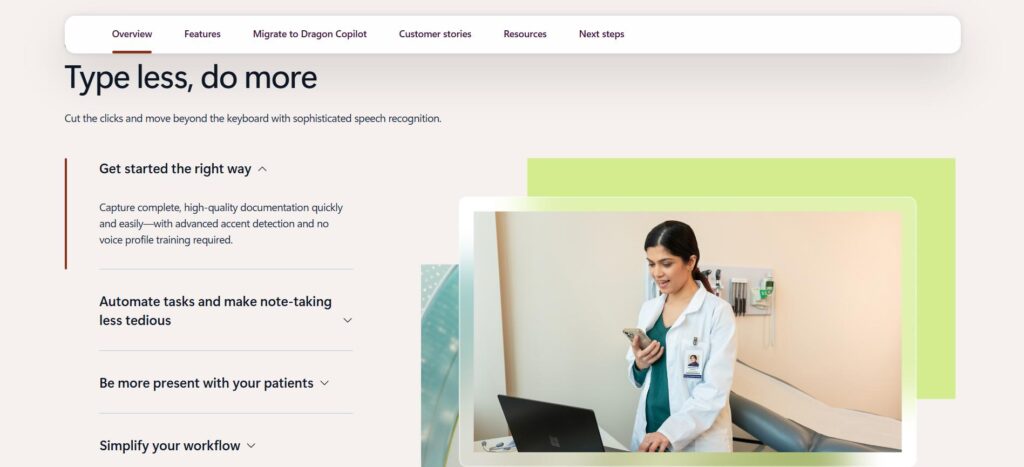
Dragon Medical One focuses on clinicians who dictate directly into supported applications. Unlike upload-first medical transcription services, it is designed around real-time clinical documentation and organizational deployment.
Key features:
- Real-time clinical speech recognition
- Dictation at the cursor in supported Chrome and Edge controls
- Voice commands for common actions
- Formatted auto-text for frequently used content
Best for: Clinicians and healthcare organizations that need frequent real-time dictation inside an established documentation workflow.
3. OVERNIGHTSCRIBE: Best for Multiple Transcription Modes
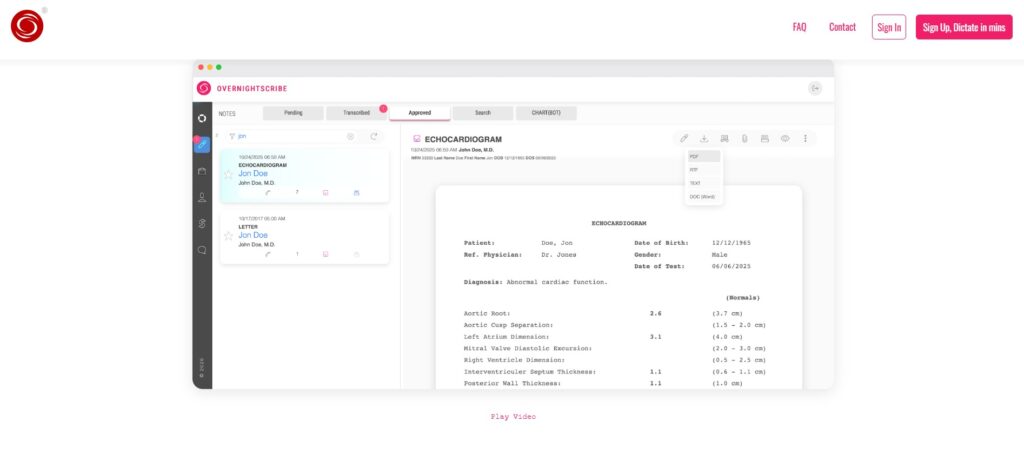
OVERNIGHTSCRIBE combines professional transcription with AI-assisted and real-time workflows. It gives practices more flexibility than medical transcription services offering only automated or only human delivery.
Key features:
- Professional medical transcriptionists
- Traditional, real-time, telephone, and mobile dictation
- Instant Note AI-assisted editor
- Custom templates and EHR-oriented delivery options
Best for: Solo and group practices that want to use different medical transcription services for different document types.
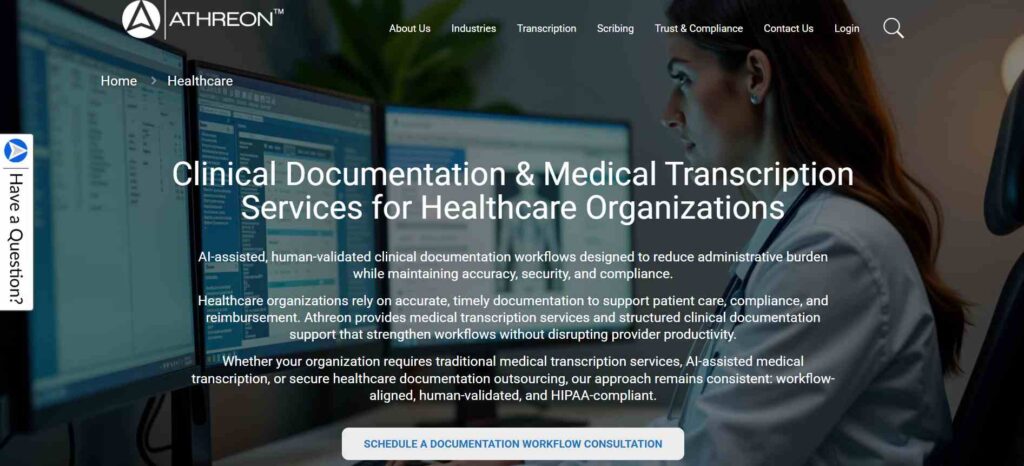
4. Athreon: Best for Human-Validated Documentation
Athreon provides AI-assisted medical transcription services with mandatory validation by medical language professionals. Its managed workflow is closer to medical transcription outsourcing services than a self-service upload tool.
Key features:
- AI-generated drafts with human validation
- Medical terminology review and quality controls
- BAA support and healthcare-oriented security workflows
- HL7 and API-based EHR integration pathways
Best for: Healthcare organizations that need managed documentation, professional review, and integration planning.
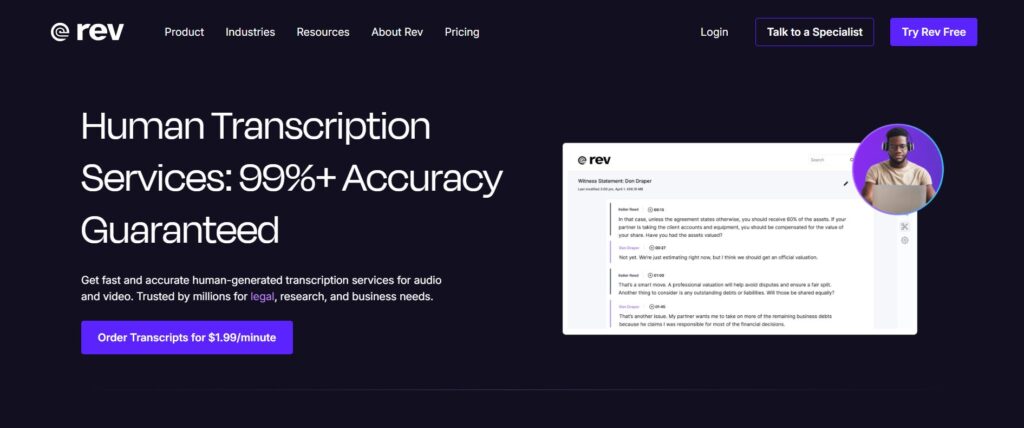
5. Rev: Best for Choosing Between AI and Human Transcription
Rev lets users order automated or human transcription through one platform. This is useful when the level of review changes between recordings, although Rev serves multiple industries rather than healthcare alone.
Key features:
- Separate AI and human transcription options
- Audio and video file support
- Interactive transcript editor
- Healthcare security and BAA options for applicable plans or orders
Best for: Teams comparing medical transcription services that want the flexibility to choose automated or human delivery file by file.
6. iMedat: Best for U.S.-Based Human Transcription
iMedat provides human medical transcription services and virtual medical scribing for healthcare, legal, insurance, and related documentation. The company states that its transcriptionists live and work in the United States.
Key features:
- Human medical transcription
- U.S.-based transcription workforce
- Virtual medical scribing
- Support for medical, legal, and insurance terminology
Best for: U.S. organizations prioritizing domestic transcription support and professionally prepared documentation.
7. Sunrise Transcription: Best for Human-Reviewed Reports
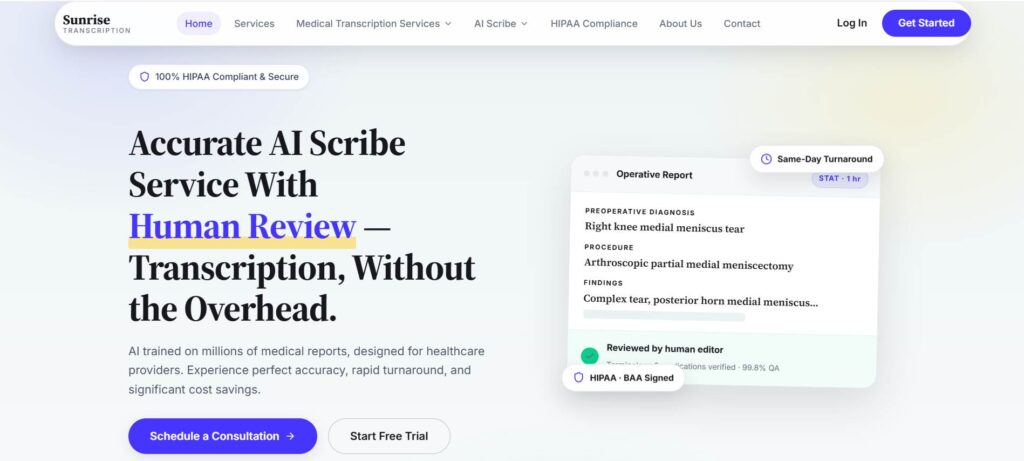
Sunrise Transcription combines AI-generated documentation with human review. Among hybrid medical transcription services, it focuses on delivering reviewed reports rather than leaving all correction to the user.
Key features:
- AI-assisted transcription with human review
- Specialty-trained staff
- Same-day standard and one-hour STAT options
- BAA and free trial advertised by the provider
Best for: Practices choosing medical transcription services for human-reviewed reports with standard or urgent turnaround options.
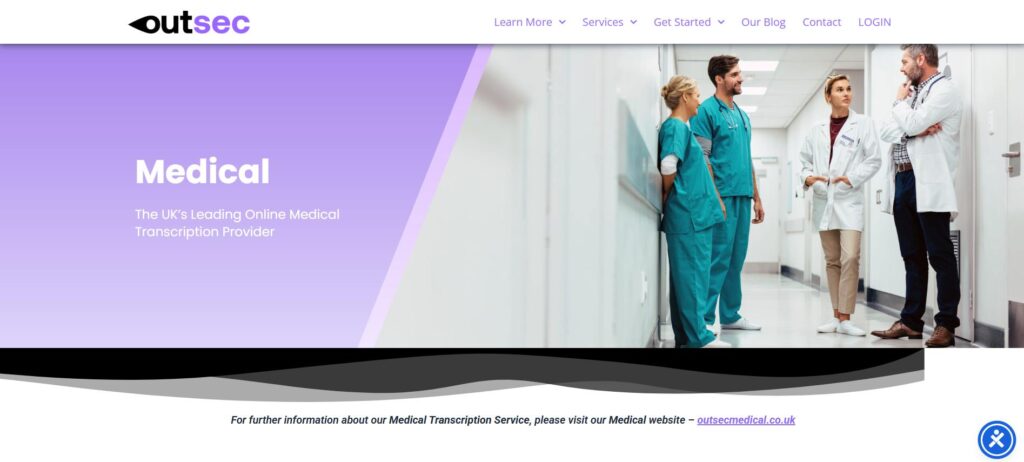
8. OutSec Medical: Best for UK Human-Only Transcription
OutSec Medical stands apart from AI medical transcription services by taking a human-only approach. The company states that UK-based specialist typists complete its clinical and medico-legal work without AI-generated transcription.
Key features:
- Human-only medical transcription services
- UK-based specialist typists
- Clinical and medico-legal document support
- Standard and priority turnaround options
Best for: UK clinicians, consultants, and medico-legal professionals who specifically prefer human transcription over AI-generated drafts.
9. NoteGPT: Best for Medical Learning and Research
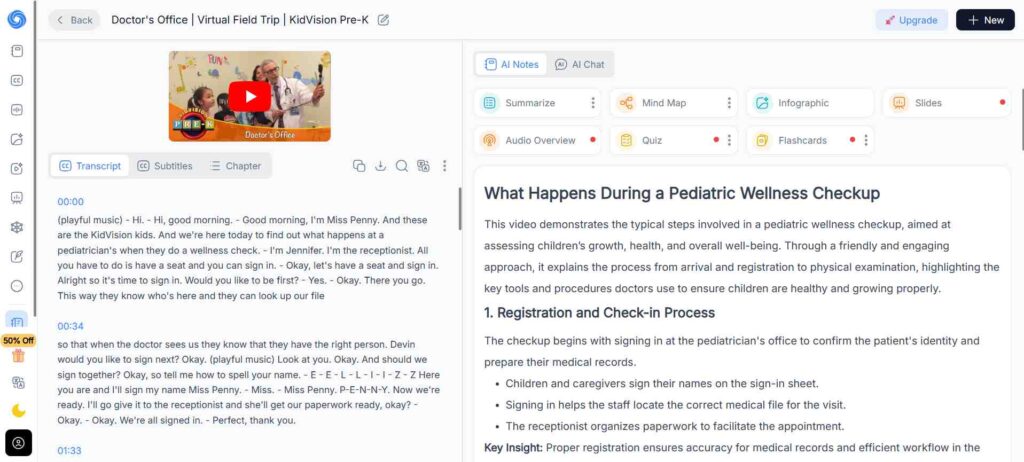
NoteGPT is a general AI learning workspace rather than a specialist clinical documentation provider. Its strength is turning transcripts into summaries and learning materials after the audio or video has been processed.
Key features:
- Audio, video, and supported link inputs
- Speaker separation and batch processing
- Summaries, translation, mind maps, and AI chat
- Follow-up explanations for unfamiliar concepts and terminology
Best for: Medical students, educators, and researchers using online medical transcription services for learning or authorized research. Patients may use it to simplify permitted content, but should confirm medical interpretations with a clinician and check applicable privacy rules.
10. Amazon Transcribe Medical: Best for Custom Applications
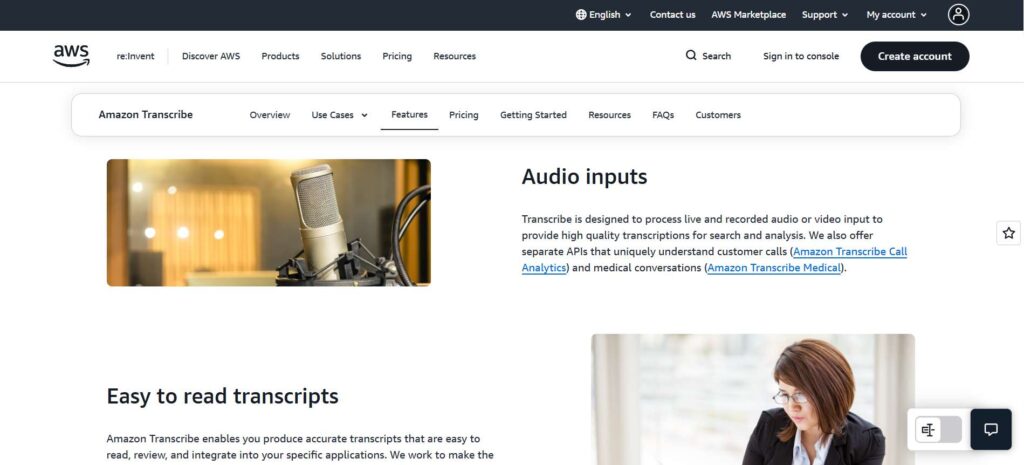
Amazon Transcribe Medical provides batch and streaming medical speech recognition through APIs. It supplies the recognition layer rather than a finished editor or managed transcription workflow.
Key features:
- Batch and real-time medical speech recognition
- APIs for dictation and conversational use cases
- Medical terminology recognition
- HIPAA-eligible and stateless service design described by AWS
Best for: Development teams building medical transcription services or voice applications that can supply their own interface, storage, permissions, review, and safeguards.
How Much Do Medical Transcription Services Cost?
Pricing reflects different deliverables. For 60 minutes, Rev AI costs $15, Rev Human $119.40, OutSec Standard £84 plus VAT, OutSec Priority £102 plus VAT, and Amazon Transcribe Medical $4.50. These medical transcription services are not like-for-like: an API response, AI draft, and professionally transcribed document require different additional work.
Subscription medical transcription services also cannot be reduced to one fixed rate without knowing monthly usage. Video Transcriber AI starts at $5 monthly, while NoteGPT Pro starts at $9.99 monthly. Dragon Medical One, Athreon, iMedat, and Sunrise require quotes; OVERNIGHTSCRIBE only publishes the starting price for Instant Note.
Compare medical transcription services by total workflow cost: transcription, correction, professional review, formatting, integrations, storage, security, and rush delivery. Low recognition prices may still require implementation or editing.
How to Choose a Medical Transcription Service
First, match the service to the source and outcome. Existing recordings fit upload-based medical transcription services. Live clinical documentation fits real-time dictation. Completed, reviewed reports fit human or hybrid services. Product development fits an API.
Next, consider the user:
- Clinicians and practices: prioritize review responsibility, templates, turnaround, EHR delivery, security documentation, and BAA availability.
- Medical students and educators: prioritize accurate lecture capture, timestamps, search, summaries, terminology explanations, and affordable usage limits.
- Researchers: prioritize speaker separation, long-file support, export formats, consent, and research-data policies.
- Patients and caregivers: prioritize clear playback, searchable text, plain-language explanations, and privacy. Treat AI output as a comprehension aid and take medical questions back to a qualified professional.
Finally, test medical transcription services with representative audio. Check accents, overlapping speakers, abbreviations, medications, dosages, dates, and negations. Review retention, deletion, encryption, human access, and whether a BAA applies to the exact plan.
Frequently Asked Questions About Medical Transcription Services
Can Medical Transcription Services Help Patients Understand a Consultation?
Yes. With consent and appropriate privacy safeguards, a transcript can help a patient revisit instructions, search unfamiliar terms, and prepare follow-up questions. AI may rewrite difficult language in plain English, but it can omit context or produce an incorrect explanation. The clinician remains the appropriate source for diagnosis, treatment, and interpretation.
Are Medical Transcription Services Useful for Medical Students?
Yes. Students can turn lectures, permitted training videos, and study-group recordings into searchable notes. AI medical transcription services may also create summaries, glossaries, flashcards, or questions. Students should compare terminology with course materials and never upload identifiable patient data without authorization.
Can Medical Transcription Services Identify Multiple Speakers?
Many AI platforms provide speaker separation for consultations, interviews, and meetings. Labels can be wrong when voices overlap or sound similar, so users should verify who said each clinically important statement.
Are AI Medical Transcription Services Accurate Enough for Clinical Records?
They can generate useful drafts, but quality varies with audio, accents, noise, specialty vocabulary, and speaker overlap. A qualified person should verify medications, doses, units, names, dates, and negative statements before clinical use.
What Is the Difference Between AI and Human Medical Transcription?
AI medical transcription services return automated text quickly. Human services use people to transcribe or validate a document. Hybrid services combine both. Choose according to speed, budget, purpose, risk, and required oversight.
Conclusion
The best medical transcription services are not defined by one accuracy claim or price. Clinicians may need real-time dictation or human-reviewed reports; developers need APIs; students and researchers benefit from searchable transcripts and AI study tools; patients may use approved recordings and plain-language explanations to participate more confidently in follow-up conversations.
Before selecting medical transcription services, test real audio, compare the complete cost, and verify privacy terms for the exact plan. When clinical decisions or official records are involved, keep an authorized human in the review process.
Among online medical transcription services, Video Transcriber AI can turn authorized consultations, interviews, lectures, meetings, and research recordings into searchable, editable text with speakers and timestamps. Its AI tools can then summarize the content or explain terminology, while the user retains responsibility for verification and appropriate medical guidance.