


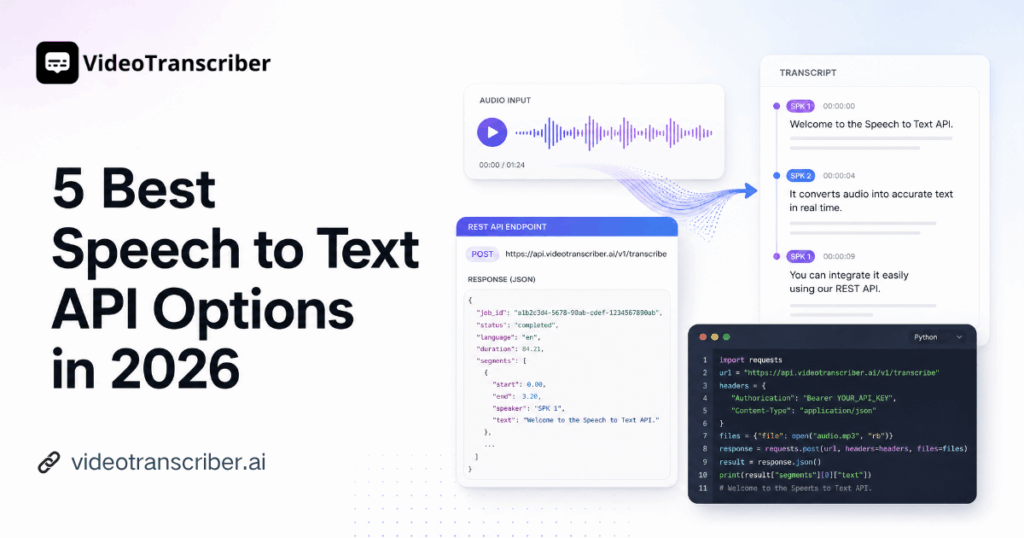
Choosing the best speech to text api in 2026 is not a decision you make from a spec sheet. It is a decision you make from your own audio. The same file run through five providers produces five transcripts, five bills, and at least two marketing pages that cannot both be telling the truth. A 5% word error rate sounds fine until you realize it means one wrong word every twenty, which is enough to wreck a downstream LLM summary when that wrong word is a name, a number, or a price. If you are building a product that turns voice into text, the best speech to text api is the one that survives your real workload, not the one with the best landing page. This guide cuts through the marketing to help you find the best speech to text api for what you are actually shipping.
Why Your Choice of the Best Speech to Text API Matters in 2026
What the Best Speech to Text API Actually Does for Your Product
At its core, a speech to text api takes an audio stream or file and returns structured text. That is the simple version. In practice, the best speech to text api does far more: it tags who spoke each line, stamps every word with a timestamp, detects the language automatically, and formats the output so your code can consume it without a cleanup script. These features used to be sold as add-ons. Today they are the table stakes that separate a production-ready API from a demo, and the best speech to text api is the one that includes them rather than charging for each one separately.
The reason this matters is compounding. Transcription is almost never your final product. It feeds a summarizer, a search index, a caption player, a voice agent, or an analytics pipeline. Errors in the transcript propagate into every layer above it. Pick the wrong speech to text api and you will spend more time patching bad output than building your actual feature, which is why the best speech to text api is worth finding before you write a single line of integration code, and why the best speech to text api is the one that returns output you can trust without a cleanup pass.
The Four Things That Separate the Best Speech to Text API from an Average One
After running benchmarks across providers, four dimensions decide whether a best speech to text api survives real use:
- Accuracy on your audio, not benchmark audio. Published word error rates are measured on clean studio recordings. Real audio has background noise, overlapping speakers, accents, and compression artifacts. Test every candidate on a sample of your actual content before trusting any number.
- Latency profile. Batch transcription tolerates minutes. Real-time voice agents need first words in a few hundred milliseconds. A speech to text api that only does batch is useless for live captions, and one that only streams is awkward for overnight processing, so the best speech to text api for you depends on which of those two modes your product actually runs.
- Language and code-switching. Global products do not live in one language. The gap between "supports 100 languages" and "handles a speaker switching languages mid-sentence" is where most vendors quietly fail, and it is often the difference between a best speech to text api that feels global and one that only works in a single market.
- Audio intelligence, bundled or bolt-on. Diarization, sentiment, entity detection, and summarization can double your effective rate if they are sold separately. The best speech to text api bundles the features your use case actually needs, so compare the all-in price of the best speech to text api candidates rather than their base rate alone.
5 Best Speech to Text API Options in 2026 (Benchmarked)
Video Transcriber AI Transcript API: One Best Speech to Text API for Every Source
Most transcription teams run three or four services without realizing it: one for YouTube links, another for TikTok and Instagram, a third for file uploads. Video Transcriber AI Transcript API replaces that stack with a single REST endpoint that accepts over ten input types, including YouTube, TikTok, Instagram, Facebook, X, BiliBili, Google Drive, Dropbox, and direct file uploads, all returning the same response schema. For a developer, that means one integration instead of four, and roughly 70% less glue code.
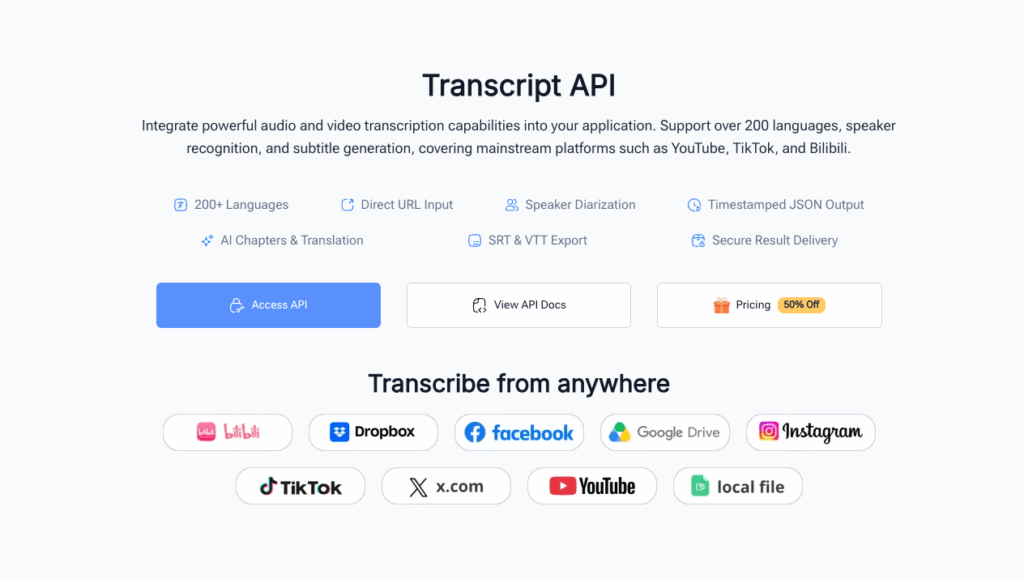
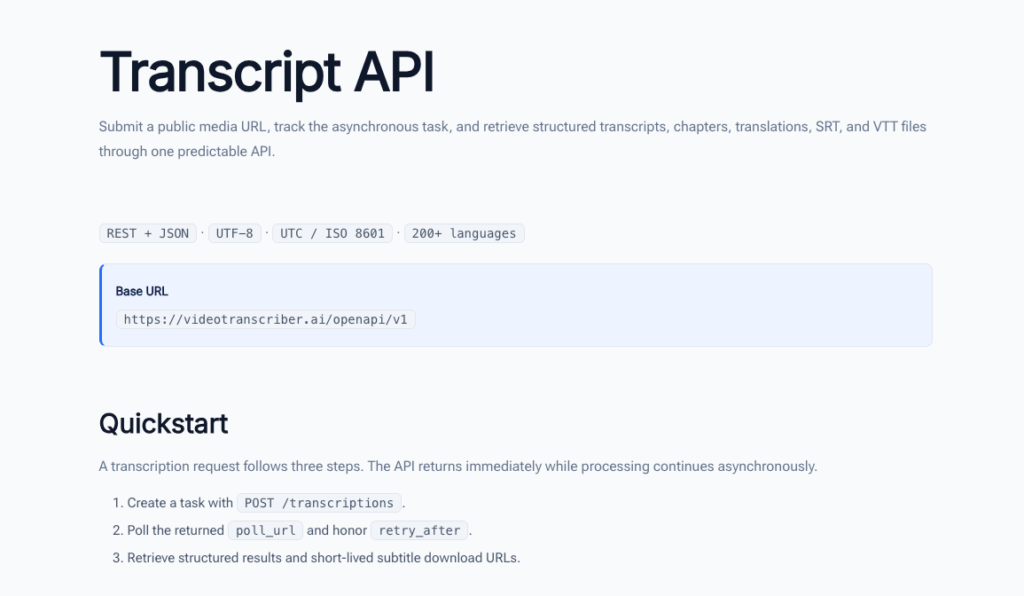
What surprised me is how much is included by default. Speaker diarization tags every segment with a label at no extra cost. Word-level timestamps come back in every response, so building an interactive transcript player or jumping to an exact quote needs no external tooling. The endpoint covers 200+ languages with automatic detection, which means non-technical teammates can process a video without knowing what language it is in. Export is plain TXT, SRT, VTT, or full JSON with metadata, specified in the request rather than post-processed by hand, and all of it ships bundled, which is rare for a best speech to text api at this price point. If your product needs to turn links from several platforms into structured text through one call, this is the best speech to text api to start with, and it is the one this guide links back to throughout. When the best speech to text api for your case is one that unifies sources instead of multiplying them, this is the pick.
Deepgram: The Best Speech to Text API for Real-Time and Voice Agents
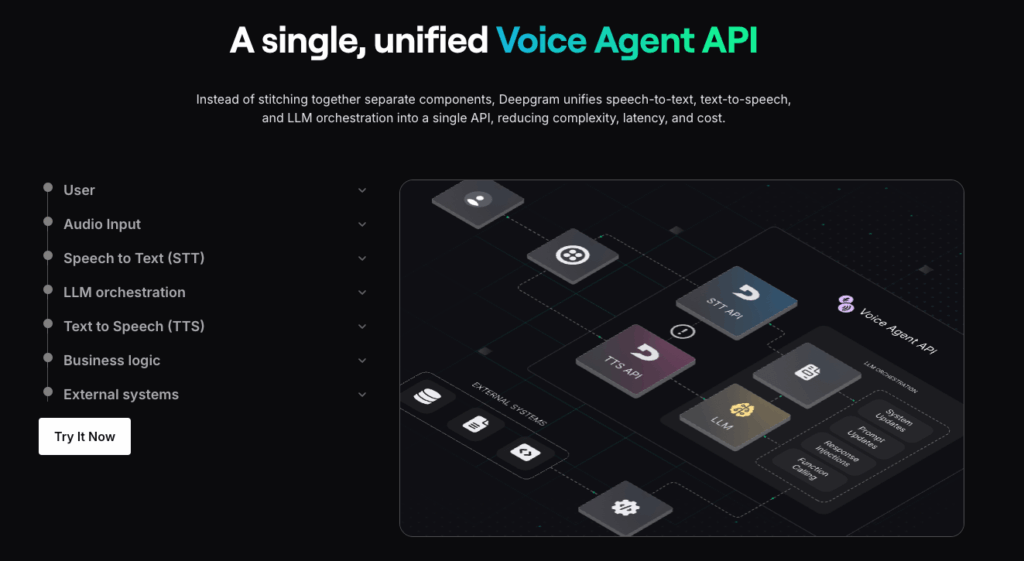
Deepgram built its reputation on speed, and the numbers still hold up. Its Nova models stream first words in roughly 200 to 400 milliseconds, which makes it the default choice when a voice agent has to respond before the user loses patience. If you have ever waited two seconds for a voice assistant to reply and mentally written it off, you already know why this latency figure matters more than any accuracy benchmark, and why the best speech to text api for a live product is the one that never makes a user wait.
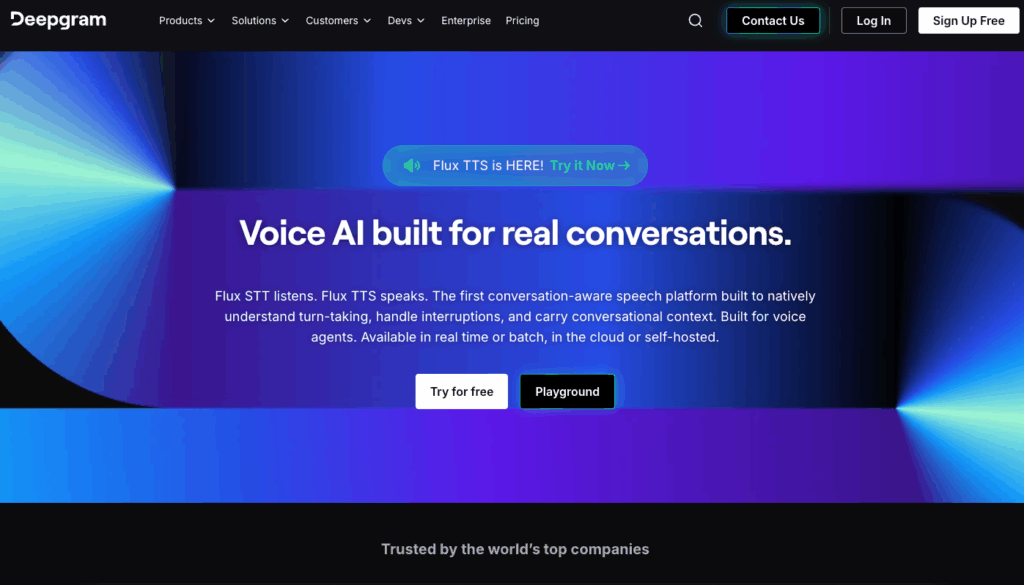
The real draw is the voice-agent pipeline. Deepgram ships end-of-turn detection, voice activity detection, and a paired text-to-speech model, which means the turn-taking logic that usually eats weeks of engineering comes pre-built. Its domain models for medical and finance audio reach far lower error rates on niche vocabulary than a general model ever will. The trade-off is language coverage: fewer languages than Google or OpenAI, and some audio-intelligence features arrive as add-ons rather than defaults. For real-time and conversational products, though, Deepgram is the best speech to text api when every millisecond counts, and it remains the best speech to text api for teams whose product only works if the voice responds instantly.
OpenAI Whisper: The Best Speech to Text API for Multilingual and Noisy Audio
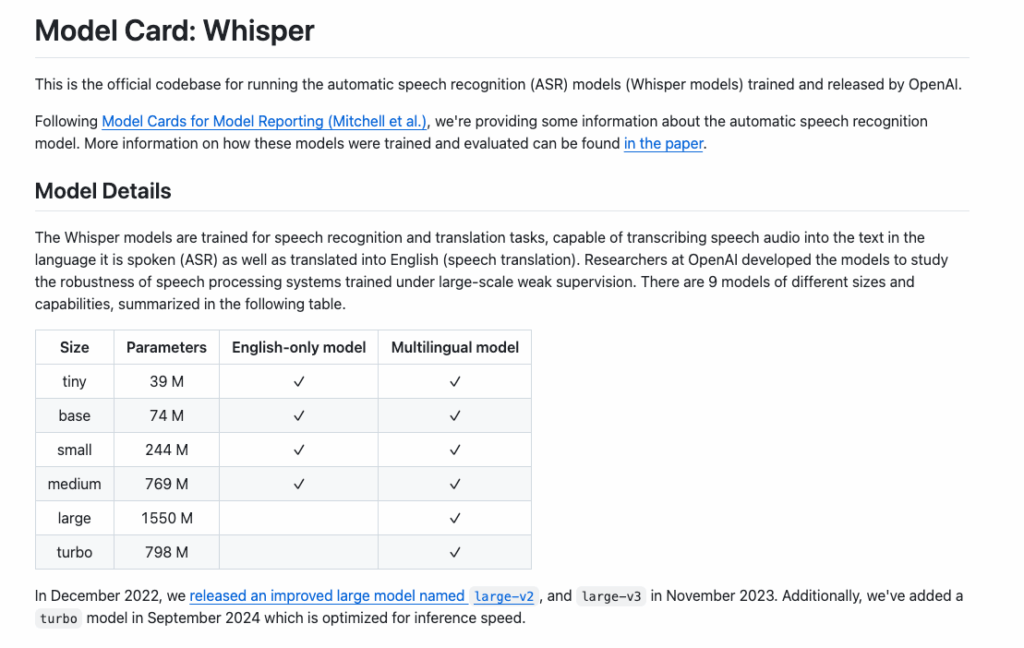
Whisper is the API you already have if your stack touches OpenAI at all, and that familiarity hides how genuinely good it is on hard audio. It handles accented speech, background noise, and technical jargon better than most managed APIs, and its 99-language coverage with automatic detection makes it the safe default for multilingual content. Translation to English is built in, which is quietly useful when you ingest audio you cannot fully understand, and all of it adds up to a strong case for Whisper as the best speech to text api for messy, multilingual recordings.
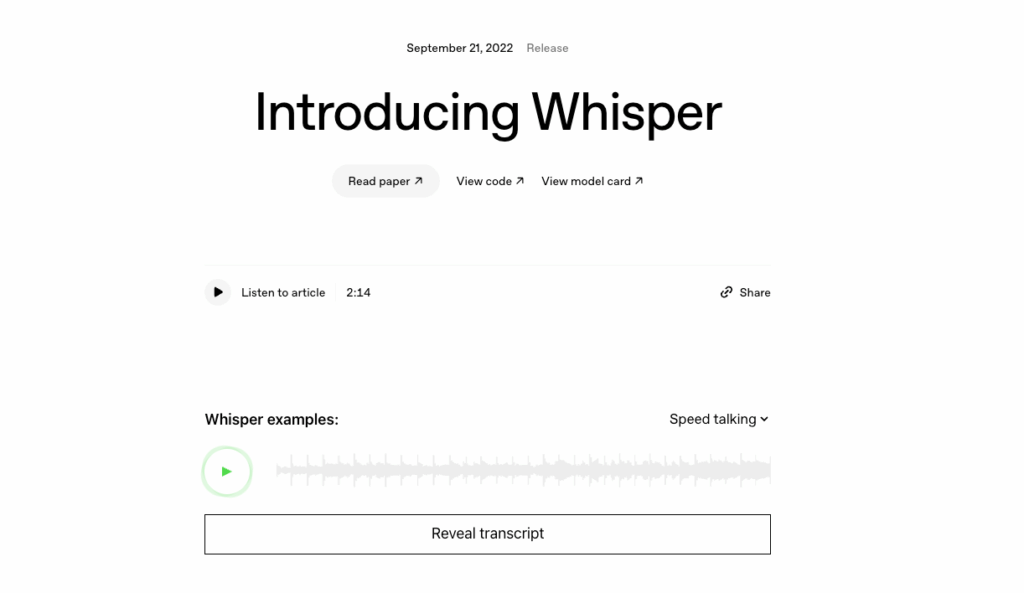
The catch is architectural. Whisper is batch-only, so it is not built for live captions or real-time agents. A 60-minute file takes a meaningful fraction of its own length to process, and the 25MB file limit forces chunking logic on longer recordings. There is no built-in diarization, so multi-speaker attribution means extra work. The upside is a clean, one-endpoint integration and the option to self-host the open-source model when volume makes managed pricing unreasonable. For post-processing recorded audio where accuracy on messy input beats raw speed, Whisper is often the best speech to text api in the room, and for teams already paying OpenAI, it is the best speech to text api to adopt without adding a new vendor.
AssemblyAI: The Best Speech to Text API for Audio Intelligence and LLM Analysis
AssemblyAI took a different bet from everyone else: transcription is the entry point, not the product. Its Universal models sit in the mid-pack on raw accuracy, but they ship the most complete intelligence layer in the category, including speaker diarization, sentiment, entity detection, PII redaction, and auto-chapters, all as request parameters rather than separate products, which is why teams that need more than raw text keep treating AssemblyAI as the best speech to text api for analysis-heavy workloads.
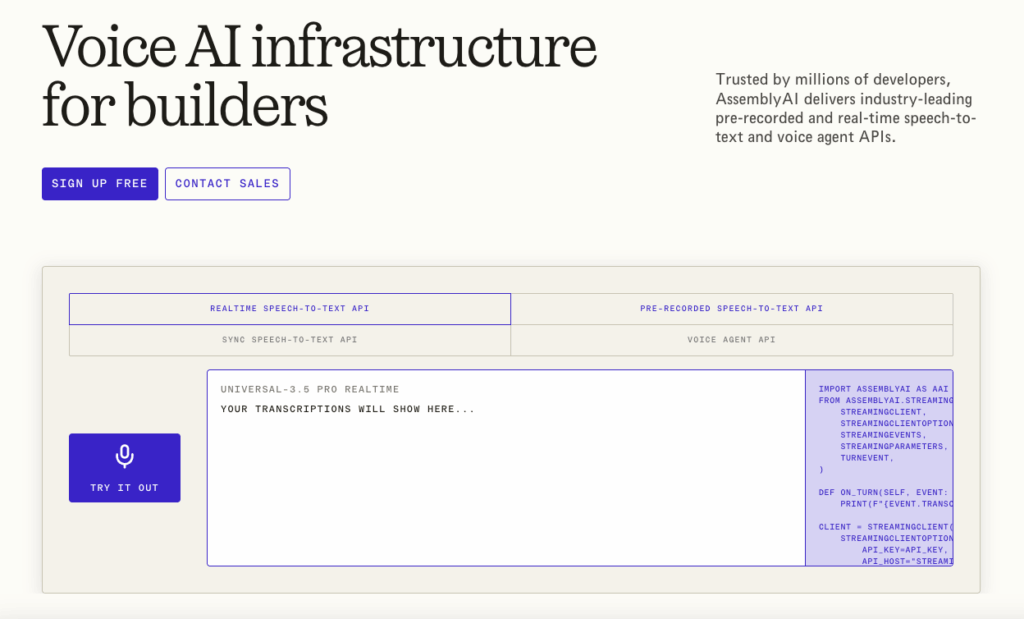
The feature that keeps developers coming back is LeMUR, which runs an LLM directly over your transcript so you can ask questions, get summaries, and extract structured data from hours of audio in a single call. That collapses a pipeline that used to require three services into one. The trade-off is cost and a poll-or-webhook async model that adds a little friction to batch jobs. If your product needs to understand audio rather than just spell it out, AssemblyAI is the best speech to text api for teams that treat transcription as the first step in an intelligence pipeline, and the best speech to text api choice when LLM analysis is the actual deliverable.
Google Cloud Speech-to-Text: The Best Speech to Text API for Language Coverage
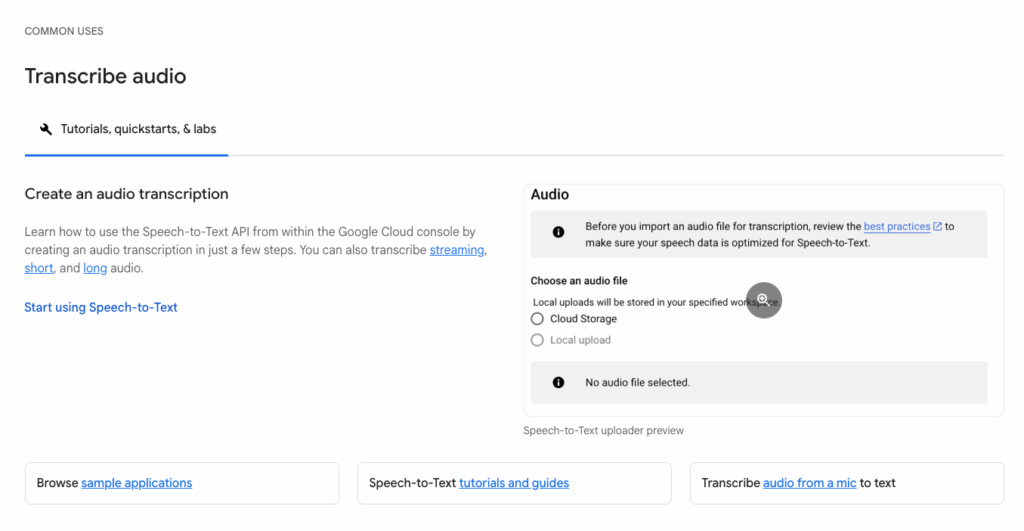
Google wins the breadth game outright. Its Speech-to-Text API supports 125+ languages, the widest coverage in the category, and its enhanced models add speaker diarization, automatic punctuation, and word timestamps. If your product is already on Google Cloud, the integration with storage, Pub/Sub, and BigQuery is essentially zero-friction, which matters more than any benchmark when you are shipping inside an existing stack, and it makes Google the best speech to text api for teams that live entirely in that ecosystem.
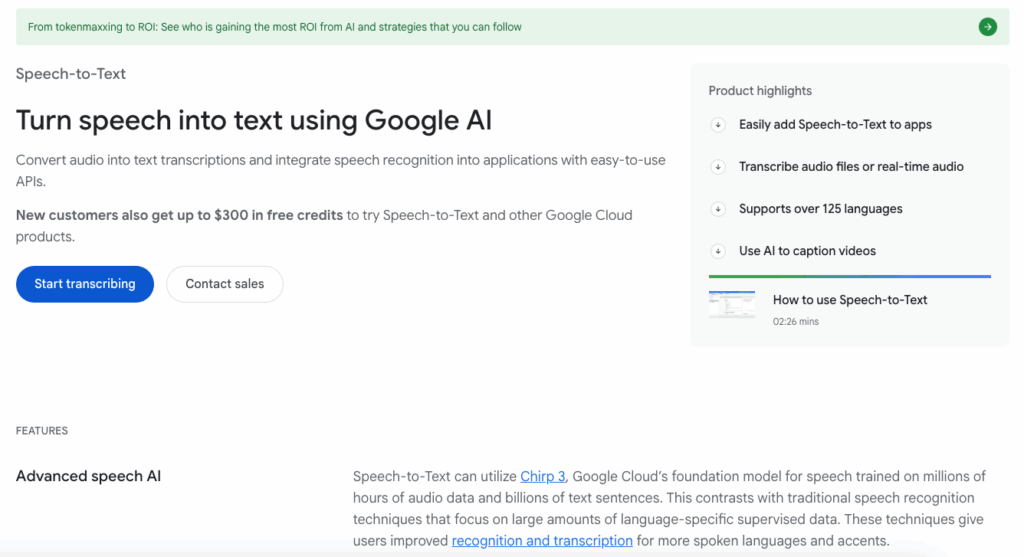
The trade-off is the usual Google one: the enhanced tier is several times the cost of budget rivals, and the standard tier is noticeably less accurate. Real-time latency sits around 300 milliseconds, workable but not class-leading. What you are paying for is reliability at planet scale, a deep enterprise feature set, and the confidence that a 125-language pipeline will not collapse the first time a customer uploads a language you have never heard of. For global and enterprise workloads, Google remains the best speech to text api when coverage and ecosystem matter more than raw speed or price, and the best speech to text api for teams that need one vendor to cover every language a customer might throw at them.
How to Choose the Best Speech to Text API for Your Workload
Match the Best Speech to Text API to Your Latency and Volume Needs
Start from your actual workload, not a feature wishlist. Ask three questions. First, is this real-time or batch? Live captions and voice agents need streaming with sub-second first words, which points to Deepgram. Overnight processing of recorded content tolerates minutes and opens up Whisper and Google. Second, what sources do you ingest? If you pull from YouTube, TikTok, Instagram, and files, a multi-source endpoint like Video Transcriber AI Transcript API removes a whole class of integration work. Third, how much does accuracy depend on domain vocabulary? Medical or finance audio benefits from a specialized model, while general content does fine on a strong general-purpose engine. Answering these three questions will narrow the field to the best speech to text api for your situation faster than any comparison table.
The honest answer is that many teams end up with two APIs: one for real-time, one for batch, plus a multi-source layer when links matter. The goal is not to pick a single winner but to map each job to the best speech to text api that does it without overpaying for features you will never call, because the best speech to text api is always a function of the specific job, not a universal ranking.
Free Tier vs. Paid: Where the Cost of a Best Speech to Text API Adds Up
Free tiers are for experimentation, not production. Deepgram offers a generous signup credit, Google gives a trial window, and several providers let you test without a card. Use those to benchmark your real audio, because the only way to know the best speech to text api for your data is to run it. But do not architect around a free tier you will outgrow in a month. The costs that actually add up are per-minute rates at your expected volume, and separately billed audio-intelligence features. A cheap base rate with diarization sold as an add-on can cost more than a higher base rate that bundles it. The best speech to text api for your budget is the one whose total bill at your volume is predictable, which is why the multi-source, all-inclusive models are often the quiet value play for smaller teams that want the best speech to text api without the surprise invoice at the end of the month.
FAQ About the Best Speech to Text API
How Accurate Are Modern Speech to Text API Models?
The leading best speech to text api models now land in the 95 to 97% range on clean audio, with the strongest hitting single-digit word error rates on studio-quality recordings. Real-world audio is harsher, often two to four times worse than published benchmarks once you add noise, accents, and overlapping speakers. That is why every provider tells you the same thing and almost nobody follows it: test on your own audio. A model that wins a benchmark can lose on your podcast, your call center, or your field recordings, and the best speech to text api for you is the one that performs on your actual files, not on a vendor's demo reel.
Can a Speech to Text API Handle Accents, Jargon, and Background Noise?
Yes, to very different degrees. OpenAI Whisper is the strongest general model on accented and noisy audio, while Deepgram ships domain-specific models that crush medical and finance jargon. Speaker diarization quality also varies sharply: the best speech to text api options label multi-speaker dialogue reliably, while budget models blur speakers together. If your audio is consistently noisy or jargon-heavy, run a head-to-head on a handful of representative clips before committing, because this is where providers diverge the most and where the best speech to text api for one team can be the worst for another, which is exactly why a generic recommendation is worse than a quick test.
How Much Does a Speech to Text API Cost at Scale?
Per-minute pricing in 2026 clusters in the 0.004 to 0.016 range for the leading providers, with batch cheaper than streaming and enhanced tiers costing several times standard. At 1,000 hours of audio, the difference between the cheapest and most expensive option can exceed fourfold. The number to watch is not the headline rate but the effective rate after add-ons like diarization, sentiment, or LLM analysis, because the best speech to text api on paper can turn expensive once those add-ons are priced in. The best speech to text api at scale is the one whose all-in cost at your volume, not its sticker price, fits the budget, so model your real usage before signing anything.
Conclusion
The best speech to text api in 2026 is not a single product. It is a match between your workload and the provider built for it. Finding the best speech to text api means testing real audio, not trusting benchmarks, and the best speech to text api for a voice agent will rarely be the best speech to text api for a batch archive. If you need one endpoint that handles YouTube, TikTok, Instagram, and files with diarization and timestamps included, Video Transcriber AI Transcript API is built exactly for that.
If you are racing a voice agent against human patience, Deepgram wins on speed. If your audio is messy and multilingual, Whisper is the safe floor. If transcription is just the first step toward understanding, AssemblyAI's LLM layer pulls ahead. If coverage and enterprise scale are non-negotiable, Google remains the default. Test on your real audio, watch the all-in cost, and stop choosing a best speech to text api from a landing page. The best speech to text api is out there, but only your own audio will tell you which one it is.