


A long video should not feel like hide-and-seek. You only want one idea, one quote, or one answer, but still end up dragging the timeline back and forth. That is why video to text AI is becoming so useful. It turns spoken content into searchable text, so the value of a video is no longer buried in the timeline.
That shift matters to far more than creators. Students use video to text AI to review lessons faster. Teams use video to text AI to revisit meetings without replaying them. Marketers use video to text AI to turn recorded content into something they can actually reuse. As more work and learning happen through video, the ability to turn speech into text is starting to feel less like a bonus and more like a basic workflow.
This guide looks at what makes a good video to text AI tool, why demand keeps growing, and which platforms stand out right now. Instead of treating every tool as interchangeable, it focuses on the real question behind most searches: which video to text AI tool actually fits the way you work?
Why Video to Text AI is Becoming Essential
The value of video to text AI is simple: reading is often faster than replaying. Once a transcript exists, you can search for keywords, pull quotes, scan sections, create captions, and reuse ideas across multiple formats. A strong video to text AI process turns passive video into active working material.
That matters across many situations. Students use video to text AI to turn lectures into review notes. Marketers use video to text AI to turn webinars into blog drafts. Creators use video to text AI to generate captions, scripts, and social copy. Teams use video to text AI to keep meeting records and extract action items. Researchers and interview-based professionals use video to text AI to find answers faster instead of listening through long recordings again.
In other words, video to text AI is no longer just a convenience feature. It is now part of how people learn, publish, organize, and reuse information.
How Video to Text AI Works
At a basic level, video to text AI extracts speech from a video and converts it into written language. Most video to text AI tools also do more than that. They may add speaker labels, timestamps, export options, summaries, subtitle files, or collaboration features.
The best video to text AI experience usually follows a simple flow:
- Upload a video file or import a link
- Let the video to text AI engine process the audio
- Review and edit the transcript
- Export the result as text, subtitles, notes, or another format
That workflow sounds simple, but the difference between tools is what happens after the transcript appears. Some video to text AI tools focus on clean, fast conversion. Others focus on meetings, subtitles, multilingual output, or content repurposing.
What to Look for in A Video to Text AI Tool
Before choosing a video to text AI platform, it helps to focus on workflow instead of features alone.
Speed and simplicity
If you mainly want text fast, choose a lightweight video to text AI converter with minimal setup.
Accuracy and readability
A good video to text AI tool should produce readable text, not just raw word output. Speaker labels and timestamps help a lot.
Input flexibility
Some people need video to text AI for uploaded files. Others want video to text AI for YouTube links, webinars, or meetings.
Output value
The real value of video to text AI appears after transcription. Can you turn the transcript into captions, notes, subtitles, a blog draft, or action items?
Fit for your use case
The best video to text AI tool for a student may not be the best video to text AI tool for a marketer or a team lead.
8 Best Video to Text AI Tools in 2026
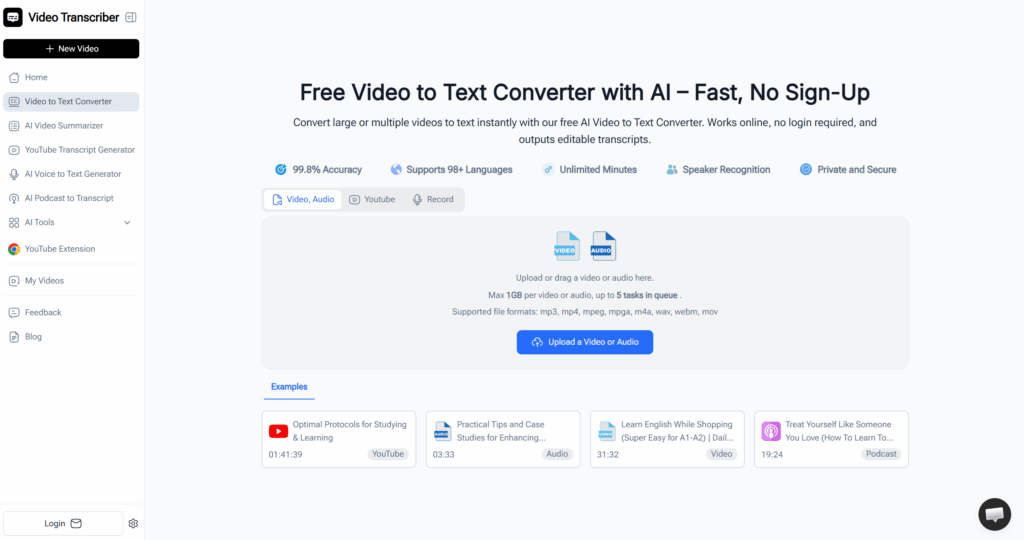
1. Video Transcriber AI - Best for Fast No-Login Online Transcription
What makes it different: Video Transcriber AI focuses on low-friction use. It has no-login access, supports for YouTube and common video formats, batch processing, speaker recognition, editable transcripts, and online use without downloads. That makes it a practical video to text AI option for users who want speed and simplicity instead of a heavy production suite.
Key features
- No sign-up required
- Supports YouTube, Zoom, MP4, MOV, AVI, and more
- Batch-friendly processing
- Speaker recognition
- Editable transcript output
Best for: users who want a simple, browser-based video to text AI tool for YouTube, meetings, lectures, and uploaded files.
2. Kapwing - Best for Turning One Video into Multiple Content Assets
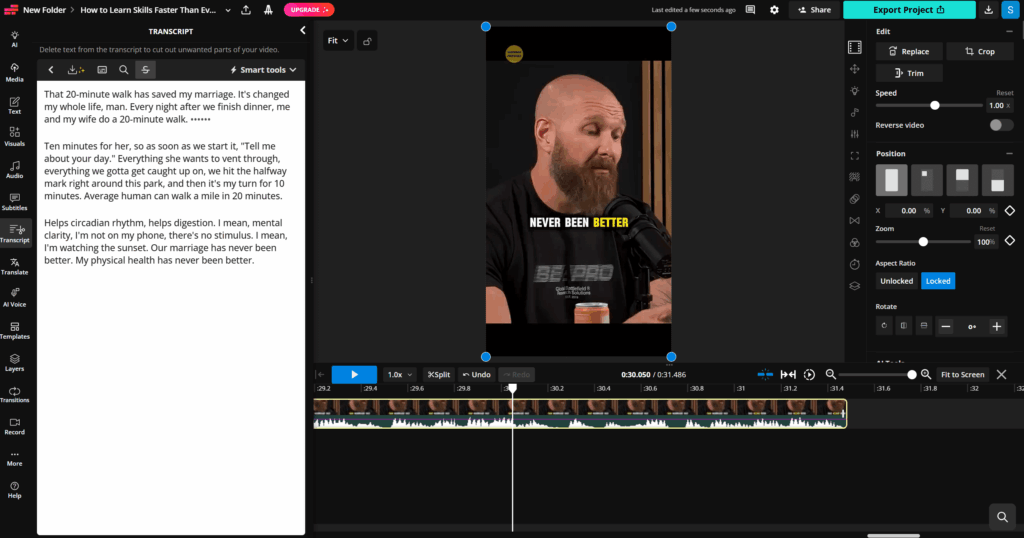
What makes it different: Kapwing does not position transcription as the end goal. It frames video to text AI as the start of a reuse workflow, helping users turn one video into transcripts for blog posts, social media copy, scripts, and subtitle files. Its official pages also mention collaborative transcript editing, broad format support, and outputs such as VTT, SRT, and TXT.
Key features
- Transcript output for blogs and social posts
- Supports many common video formats
- VTT, SRT, and TXT export
- Shareable transcript workflows
- Useful for caption-ready content
Best for: creators and marketers who want video to text AI plus content repurposing.
3. Descript - Best for Editing Video by Editing Text
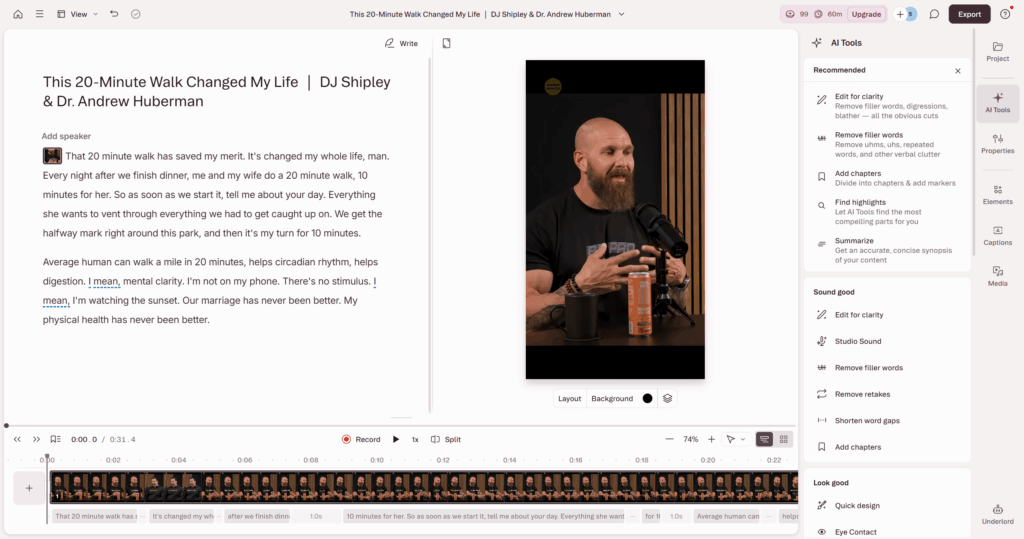
What makes it different: Descript treats video to text AI as the entry point to editing. Its official pages emphasize converting video into transcripts, blog posts, summaries, captions, and scripts, while also making video and podcast editing feel like editing a document. That makes it a strong video to text AI choice for users whose work continues after transcription.
Key features
- Text-based editing workflow
- Strong creator and podcast positioning
- Useful for summaries, scripts, and captions
- Supports MP4 and MOV workflows
- Editing and publishing in one platform
Best for: creators who want video to text AI inside a text-first editing workflow.
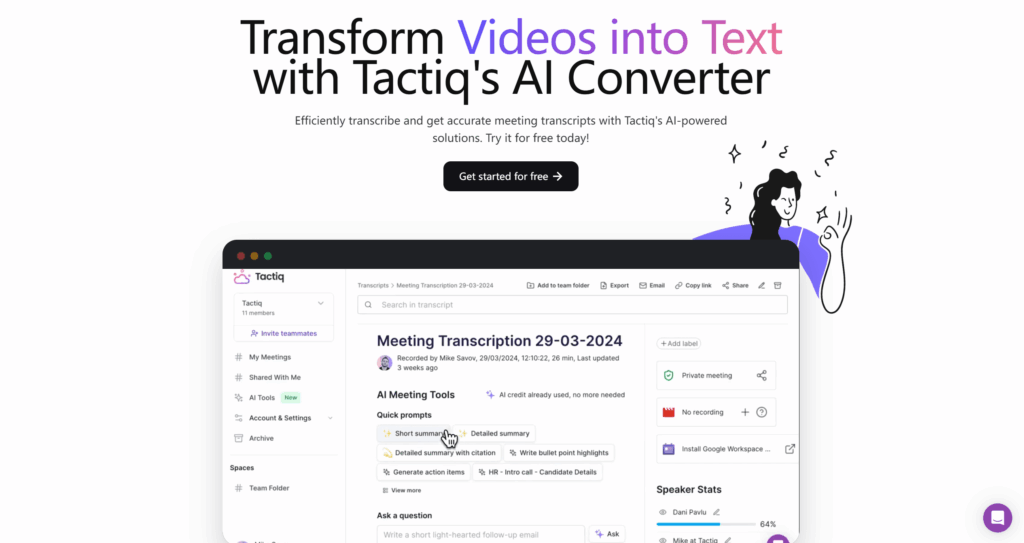
4. Tactiq - Best for Live Meeting Transcripts and Action Items
What makes it different: Tactiq is more focused than a general video to text AI converter. Its official pages center on live transcription for Zoom, Google Meet, and Microsoft Teams, along with summaries, action items, follow-up emails, reusable prompts, and workflow automation. For teams, that makes video to text AI useful not just for recording what happened, but for moving work forward after the meeting.
Key features
- Live meeting transcription
- AI summaries
- Action items and follow-up support
- Workflow automation angle
- Built for business meetings
Best for: teams that need video to text AI for meetings, summaries, and follow-up tasks.
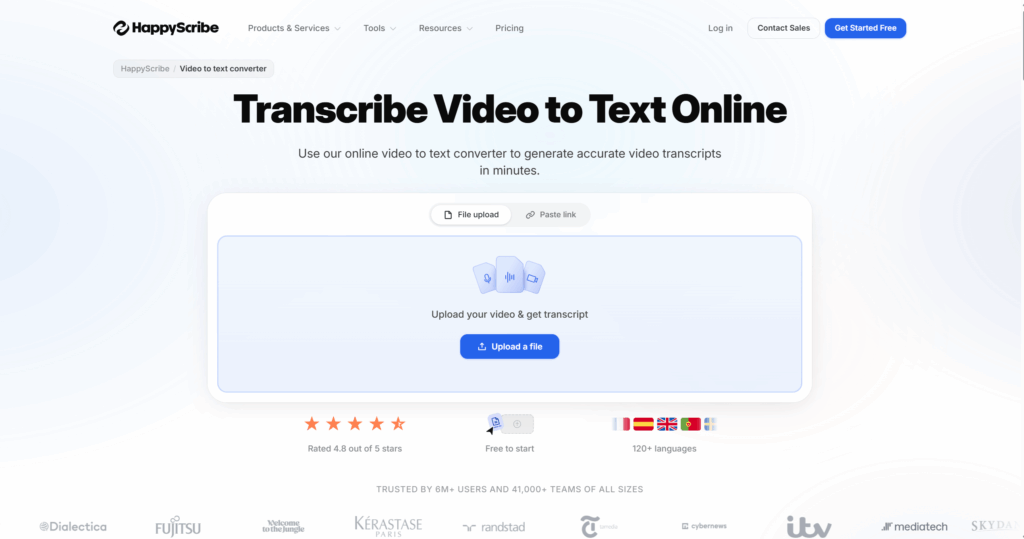
5. Happy Scribe - Best for Transcript-to-Subtitle Workflows
What makes it different: Happy Scribe fits users who care about polished delivery after transcription. It is widely used for turning speech into transcripts that can then become subtitles, captions, or multilingual media assets. In a video to text AI comparison, its biggest strength is that it sits naturally between transcription and subtitle production.
Key features
- Strong subtitle workflow
- Useful for education and media
- Good fit for multilingual projects
- Delivery-oriented transcription workflow
- Common choice for subtitle-heavy needs
Best for: users who need video to text AI plus subtitle-ready output.
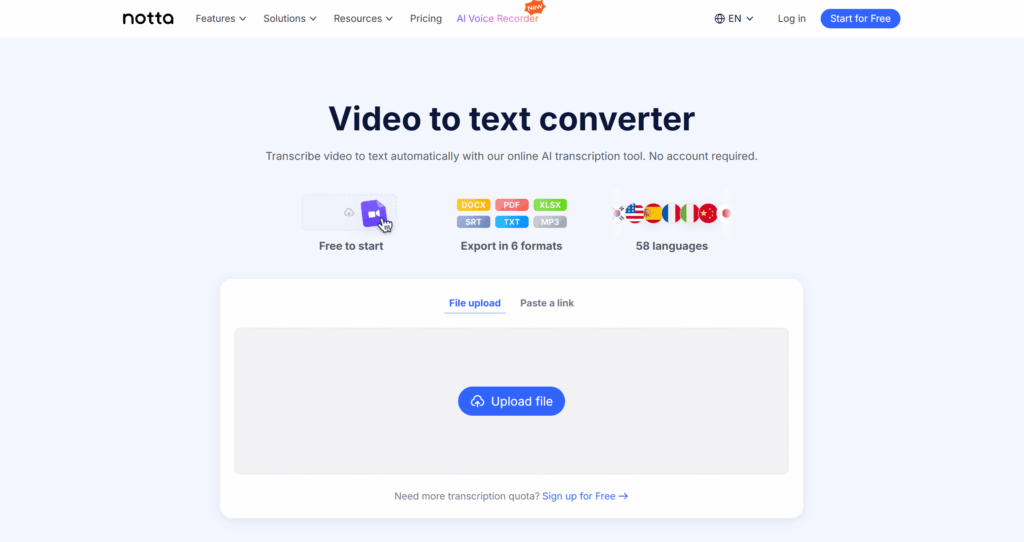
6. Notta - Best for Turning Long Recordings into Notes
What makes it different: Notta is more productivity-focused than creator-focused. In practice, that means video to text AI becomes a note-taking and review tool for lectures, webinars, meetings, and interviews. It is a good fit when the final goal is not a polished media asset, but useful written information.
Key features
- Good for lectures and webinars
- Summary-friendly workflow
- Searchable notes angle
- Useful for study and internal review
- Practical for long spoken content
Best for: students, teams, and professionals who want video to text AI plus summaries and notes.
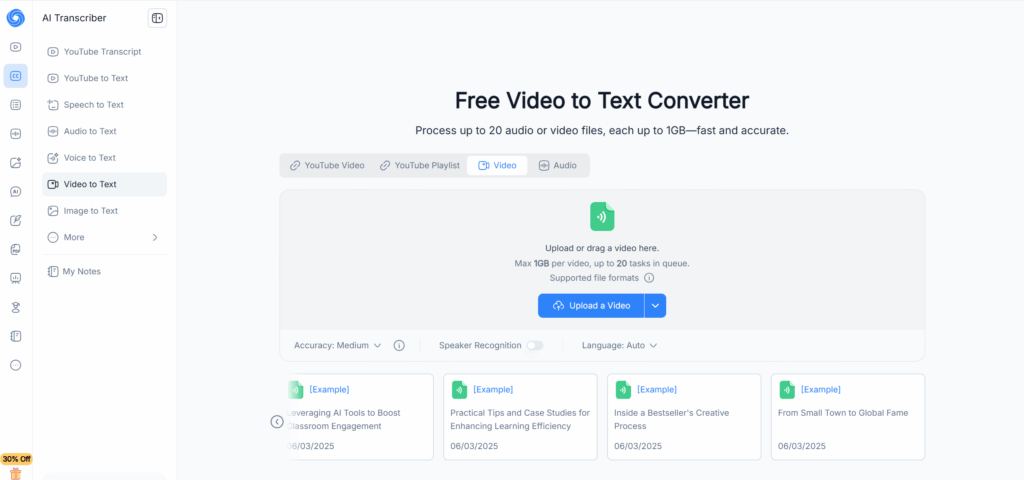
7. NoteGPT - Best for Lecture and YouTube Learning Workflows
What makes it different: NoteGPT stands out because it frames video to text AI around learning. Its official pages highlight YouTube transcript generation, summarization, translation, and tools for long educational videos. That gives it a different identity from the usual creator-first or meeting-first video to text AI tools.
Key features
- Strong YouTube transcript angle
- Summary-friendly learning workflow
- Helpful for long lessons and lectures
- Useful for review and study
- Good fit for education-focused tasks
Best for: learners who want video to text AI for courses, YouTube videos, and study review.
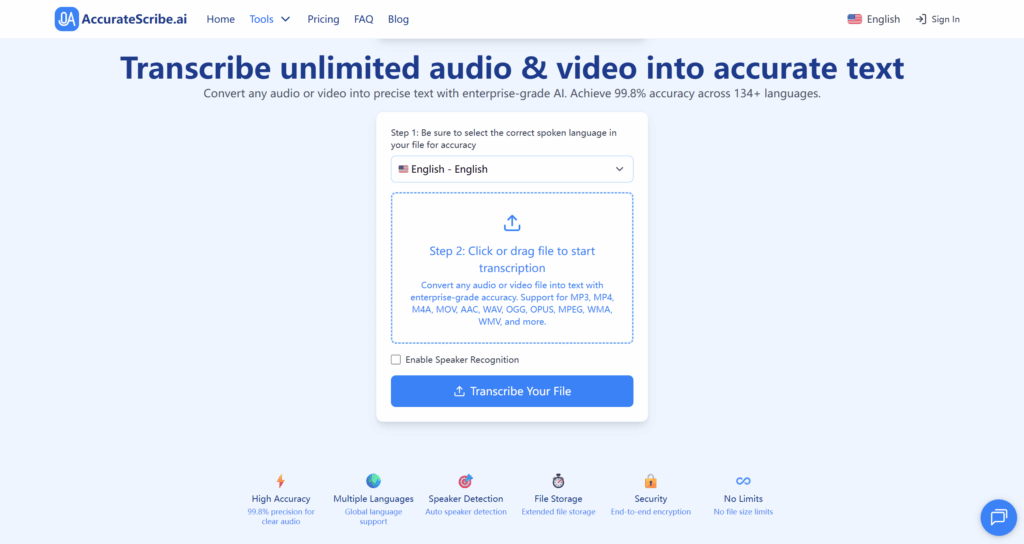
8. AccurateScribe - Best for Export Flexibility
What makes it different: AccurateScribe takes a more straightforward approach to video to text AI. Its official site emphasizes fast transcription, broad language coverage, and exports such as PDF, DOCX, TXT, and SRT. That makes it appealing to users who care more about getting text into the right file format than about editing or collaboration extras.
Key features
- Export-friendly workflow
- Transcription-first positioning
- Useful for students and professionals
- Broad output flexibility
- Simpler value proposition
Best for: users who want a newer video to text AI option with many export formats.
Quick Comparison Table
| Tool | Best Differentiator | Best For | Workflow Type | Strongest Output |
| Video Transcriber AI | No-login, batch-friendly conversion | Students, creators, teams | Lightweight converter | Editable transcript |
| Kapwing | One video into many content assets | Creators, marketers | Repurposing workflow | Transcript + content reuse |
| Descript | Edit video by editing text | Creators, podcasters | Editing workflow | Transcript + edited media |
| Tactiq | Meeting summaries and action items | Teams, managers | Meeting workflow | Transcript + follow-up tasks |
| Happy Scribe | Subtitle-ready transcription | Media, education | Subtitle workflow | Transcript + subtitles |
| Notta | Notes and summaries from long recordings | Students, professionals | Productivity workflow | Transcript + notes |
| NoteGPT | Study-first transcript flow | Learners, educators | Learning workflow | Transcript + summary |
| AccurateScribe | Export flexibility | Professionals, students | Conversion workflow | Transcript + multiple file formats |
Tips to Get Better Results with Video to Text AI
A good video to text AI tool will save time, but a few habits can improve results even more.
Start with better audio
Even the best video to text AI tool will struggle with heavy background noise, overlapping speakers, or weak microphone quality.
Choose the tool by the next step
If you need captions, choose a subtitle-friendly video to text AI tool. If you need notes, choose one built for summaries. If you need text fast, use a simpler video to text AI converter.
Fix names and jargon first
The fastest way to improve a video to text AI transcript is to correct names, brand terms, acronyms, and technical vocabulary before export.
Reuse the transcript immediately
The value of video to text AI grows when you quickly turn the transcript into notes, captions, blog outlines, or searchable documentation.
Frequently Asked Questions About Video to Text AI
1. What is the best video to text AI tool in 2026?
The best video to text AI tool depends on your workflow. Video Transcriber AI is strong for fast no-login conversion, Kapwing is strong for content reuse, Descript is strong for editing, and Tactiq is strong for meetings.
2. Can video to text AI transcribe YouTube videos?
Yes. Several video to text AI tools support YouTube-related workflows directly or indirectly, including Video Transcriber AI and tools that accept video links or uploaded files.
3. Is video to text AI accurate?
A good video to text AI tool can be very useful and often highly accurate, but results still depend on audio quality, speaker overlap, accents, and background noise.
4. Is there a free video to text AI tool?
Yes. Some video to text AI tools offer free access, trials, or no-login entry points. Video Transcriber AI explicitly promotes free online transcription without sign-up.
5. What is the difference between a video to text AI converter and a full suite?
A video to text AI converter focuses on turning speech into text quickly. A fuller suite adds editing, subtitles, summaries, collaboration, or workflow automation.
Conclusion
The best video to text AI tools in 2026 are useful for the same reason good search is useful: they help you get to what matters faster. They take ideas out of the timeline and put them into a form you can actually work with.
If your priority is speed, low friction, and a clean online workflow, Video Transcriber AI is one of the best places to begin. Its video-to-text converter is designed for fast transcription, common formats, YouTube-friendly use cases, editable output, and no-login access, which makes it a practical choice for anyone who wants to move from recording to usable text with less effort.