


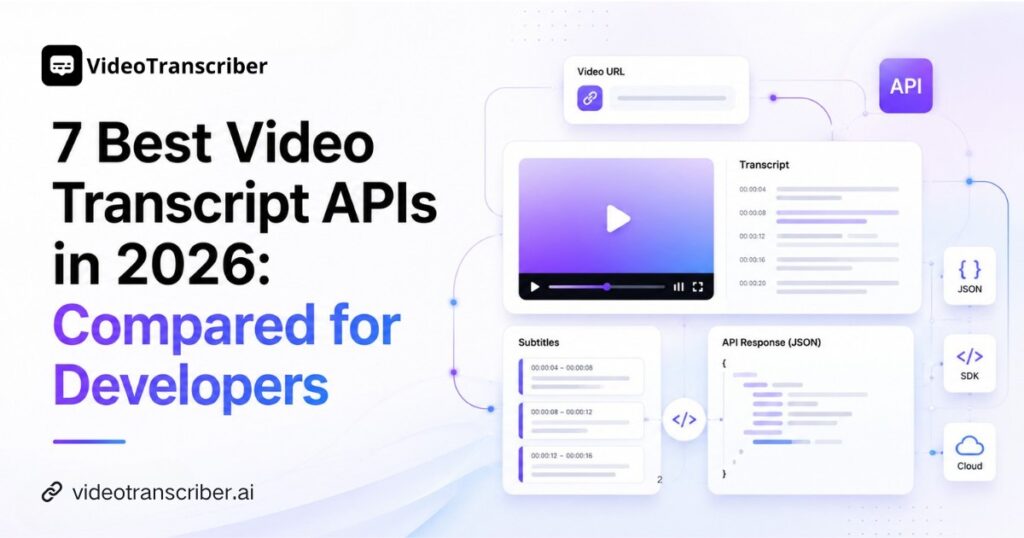
In 2026, one-person companies (OPCs), indie developers, and creator-led startups are shipping products with smaller teams. AI coding and automation are lowering the cost of building, so every extra media downloader, storage step, or transcription service adds avoidable maintenance. Recent reporting also points to AI as an important driver behind the growth of solo and lean businesses.
For products built around YouTube, TikTok, courses, podcasts, or user-generated video, a video transcript API can turn speech into structured data for search, subtitles, summaries, and AI features.
But the best video transcript API depends on the workflow. Some services accept public video URLs, while others are stronger for live streaming, cloud-hosted media, or speech intelligence. We compared seven options for developers looking for a practical video transcript API in 2026.
What Makes a Good Video Transcript API in 2026?
A useful video transcript API should reduce engineering work before and after transcription, not simply return text. We compared five production factors:
- Input support: A strong video transcript API should fit where your media already lives, whether that is a public platform URL, cloud-hosted file, or real-time stream.
- Transcript structure: Timestamps, speaker labels, language detection, and predictable JSON matter when the transcript feeds search, editing, subtitles, or AI.
- Processing model: Long-form video often suits asynchronous processing, while live captions and voice applications require streaming.
- Downstream features: Chapters, translation, subtitle output, summarization, or analytics can reduce the number of extra services in your stack.
- Pricing: Compare the full workflow cost, including optional diarization, translation, storage, or AI analysis.
7 Best Video Transcript APIs: Quick Comparison
| API | Best Fit | Input Model | Processing | Notable Pricing |
| Video Transcriber AI | Multi-platform public video URLs | Platform, cloud, and public media URLs | Async | 1 API quota per transcription minute |
| Supadata | Hosted and social video data | Hosted video URLs + social APIs | Async for longer video | 100 free credits/month |
| AssemblyAI | Speech intelligence | Pre-recorded media and streams | Async, sync, real-time | Universal-2 from $0.15/hr |
| Deepgram | Real-time applications | Pre-recorded and streaming media | Pre-recorded + real-time | Nova-3 from $0.0048/min |
| Google Cloud Speech-to-Text | Google Cloud workloads | Media and streams | Sync, batch, streaming | Standard V2 from $0.016/min |
| Amazon Transcribe | AWS media pipelines | S3 media and streams | Batch + streaming | Pay-as-you-go |
| Speechmatics | Multilingual/private deployment | Files and live streams | Batch + real-time | Pro from $0.129/hr |
These figures were checked against the providers' current official documentation and pricing information in August 2026.
1. Video Transcriber AI: Best for Multi-Platform Video URL Transcription
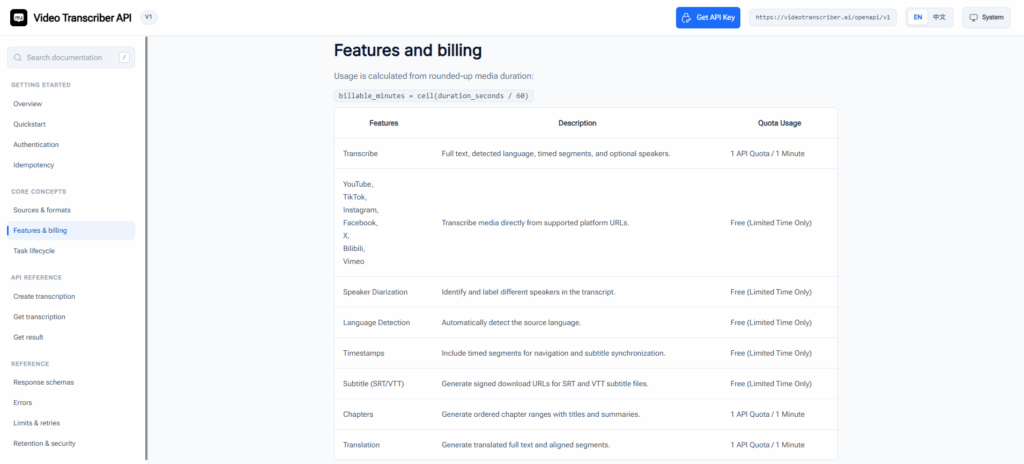
Video Transcriber AI Transcript API is built for developers whose workflow starts with an online video URL. Its OpenAPI accepts public URLs from YouTube, TikTok, Instagram, Facebook, X, Bilibili, Google Drive, Dropbox, and direct media files, and supports 200+ languages.
The video transcript API processes tasks asynchronously and can return full text, timed segments, optional speaker labels, chapters, translation, and signed SRT/VTT links. Transcription costs one API quota per billable minute; chapters and translation each add one quota per minute.
Best for: a social media transcription API workflow, video search, learning tools, subtitle products, and AI apps that need one video transcript API across multiple public sources.
2. Supadata: Best for Social Media Transcripts and Content Data
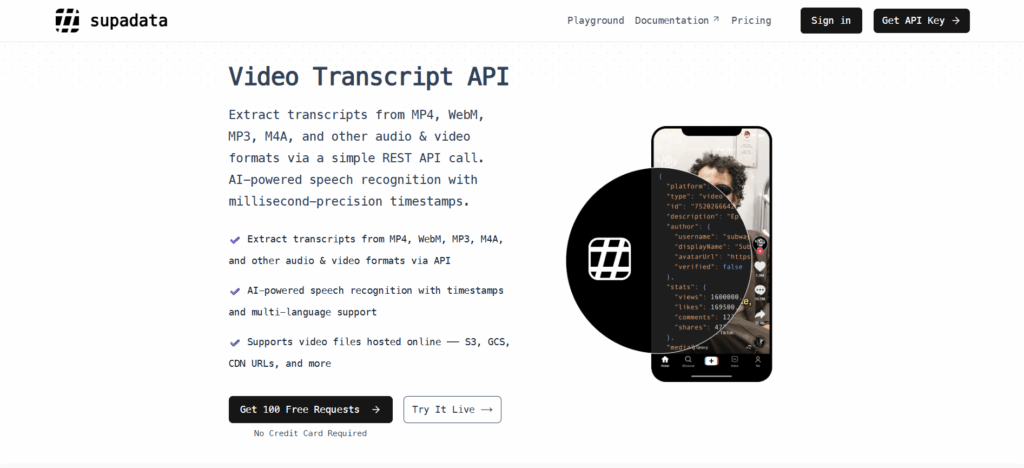
Supadata is a strong video transcript API for developers working with hosted video and web-media data. Its Video Transcript API accepts online file URLs such as S3, GCS, and CDN-hosted media, supports 50+ languages, returns timestamped JSON, and switches to asynchronous processing for videos longer than 20 minutes.
Supadata also offers platform-specific transcript APIs, making it useful when transcription is part of broader social content extraction, RAG, research, or monitoring. Its free tier includes 100 credits per month.
Best for: developers who want a video transcript API alongside social media data, research, automation, or AI-ready content extraction.
3. AssemblyAI: Best for Speech Intelligence in Media Applications
AssemblyAI is better viewed as a speech AI platform than a URL-first video transcript API. It supports pre-recorded, synchronous, and real-time speech-to-text, making it a better fit when your application already controls the media input.
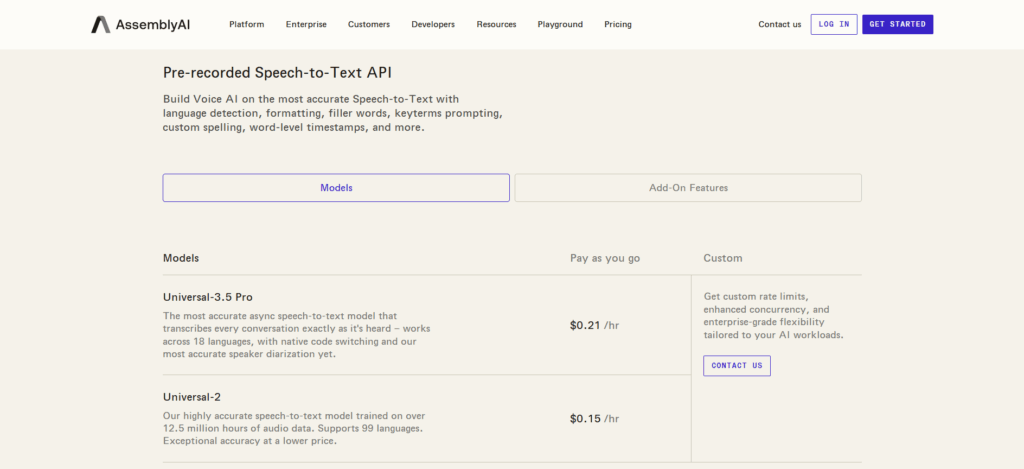
Universal-2 supports 99 languages at $0.15 per hour, while Universal-3.5 Pro costs $0.21 per hour and supports 18 languages. Optional speech-understanding capabilities include entities, chapters, sentiment, key phrases, and summarization.
That makes this AI transcription API attractive when transcription is only the first layer of a larger product.
Best for: meeting tools, conversation intelligence, media analytics, and apps that need a video transcription API plus deeper speech understanding.
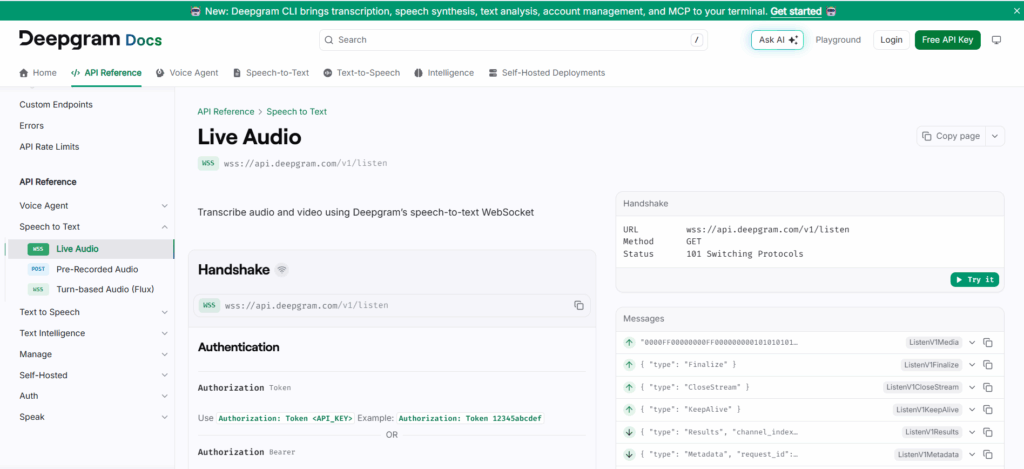
4. Deepgram: Best for Real-Time Video and Streaming Transcription
Deepgram is one of the stronger choices when the video transcript API requirement is really a low-latency speech problem. Its platform supports REST-based pre-recorded transcription and WebSocket streaming for live applications.
Nova-3 Pay-As-You-Go pricing currently starts at $0.0048 per minute for monolingual transcription and $0.0058 per minute for multilingual transcription. Speaker diarization is an optional $0.0020-per-minute add-on. Deepgram also offers Flux for conversational voice-agent workloads.
Deepgram is therefore more focused on media your application already controls than on fetching social video URLs.
Best for: live captions, streaming video, meetings, voice agents, and real-time video transcription API workloads.
5. Google Cloud Speech-to-Text: Best for Large-Scale Cloud Transcription
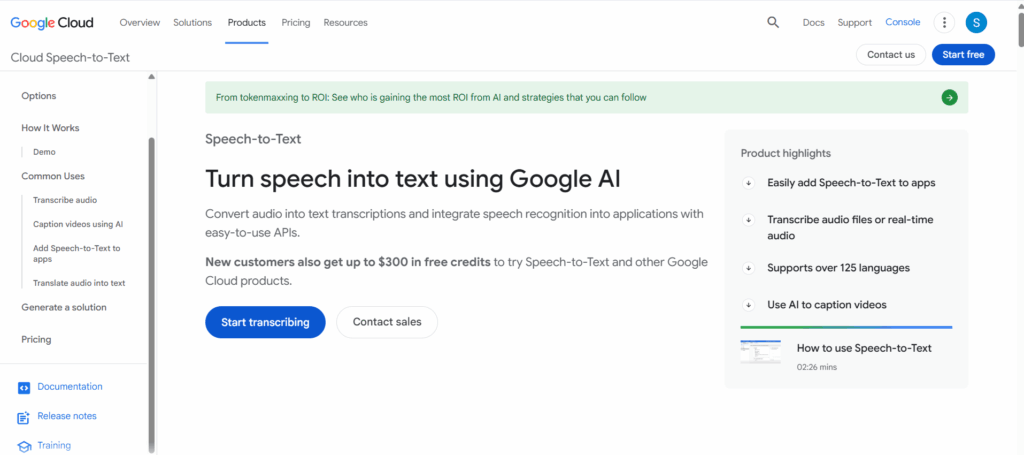
Google Cloud Speech-to-Text is a natural video transcript API option for teams already using Google Cloud. Chirp 3 is available through Speech-to-Text V2 and supports streaming, short-form recognition, batch recognition, speaker diarization, and automatic language detection.
Google currently lists Chirp 3 transcription across 85+ languages and variants. Standard Speech-to-Text V2 recognition starts at $0.016 per minute for the first 500,000 minutes processed each month, with volume-based pricing at higher usage levels.
Google generally expects developers to manage the surrounding media pipeline rather than serving as a social-video URL ingestion layer.
Best for: enterprise-scale transcription, multilingual applications, and teams that want a video transcript API inside an existing Google Cloud stack.
6. Amazon Transcribe: Best for AWS-Native Media Workflows
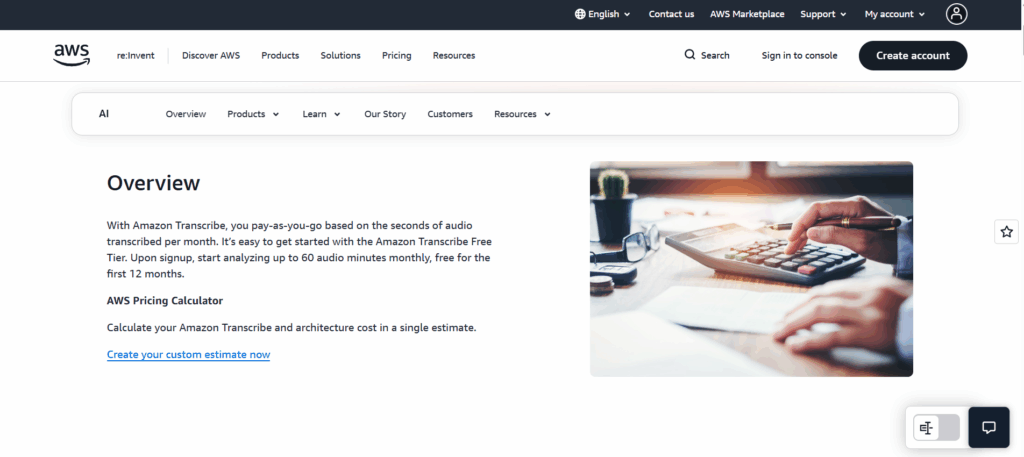
Amazon Transcribe fits developers whose video or audio already lives in AWS. Batch transcription works with stored media, including media in Amazon S3, while streaming transcription processes incoming media in real time.
AWS bills by processed audio duration in one-second increments, with a 15-second minimum per request. Pricing varies by region and usage tier; current US East examples list $0.006 per minute for a 2-million-minute batch workload and $0.01 per minute for streaming at the same volume.
For public social videos, developers may need a separate ingestion step before using this video transcript API alternative.
Best for: S3-based media libraries, AWS applications, and teams that prefer their transcription API for developers to stay inside an AWS architecture.
7. Speechmatics: Best for Multilingual and Private Deployment Workflows
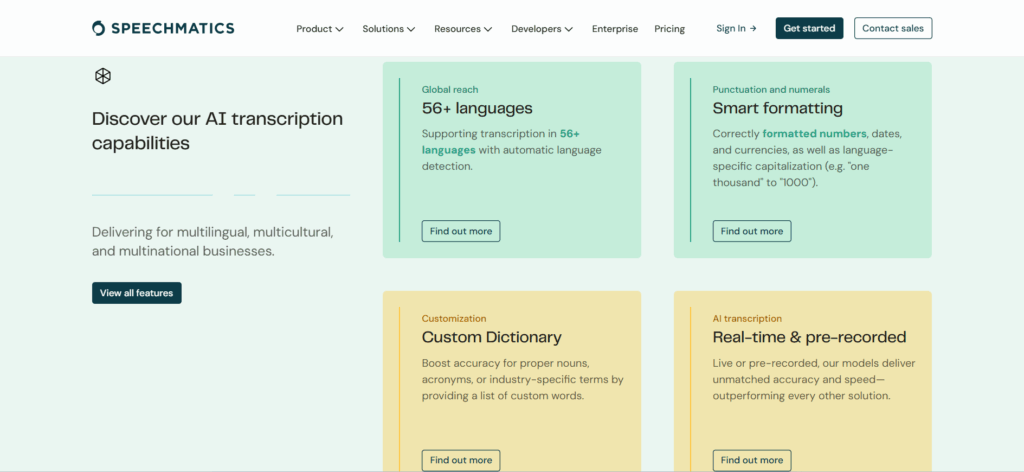
Speechmatics is a compelling video transcript API choice when language coverage and deployment control matter. Its current pricing page lists 56+ languages, speaker diarization, precise timestamps, subtitle formatting, language identification, and real-time latency below one second.
Pro pricing starts at $0.129 per hour for Batch Melia 1. Enterprise deployment options include SaaS, private cloud, containers, virtual appliances, and on-device deployment.
That flexibility separates Speechmatics from many SaaS-only services.
Best for: multilingual media, complex accents, privacy-sensitive infrastructure, and organizations that need a video transcription API with flexible deployment.
How the Best Video Transcript APIs Compare by Workflow
The easiest way to choose a video transcript API is to start with the media workflow instead of a generic feature checklist.
Online Video and Social Media Transcription
For YouTube, TikTok, Instagram, Facebook, X, and other online sources, prioritize a video transcript API that accepts the source URL directly. Video Transcriber AI is designed around this model, while Supadata also provides platform-focused products. This can reduce separate downloader and hosting work.
Uploaded and Cloud-Hosted Media
If you already control the media, AssemblyAI, Deepgram, Google Cloud, Amazon Transcribe, Speechmatics, and Supadata become more relevant. The best video transcript API is often the one that fits your existing storage environment.
Real-Time Video and Streaming
For live captions or voice interactions, streaming matters more than social-platform support. Deepgram, AssemblyAI, Google Cloud, Amazon Transcribe, and Speechmatics all offer real-time paths; a batch video transcript API is better suited to recorded video.
AI Search, RAG, and Content Analysis
For RAG and AI search, look beyond plain text. A video transcript API with timestamps, speakers, chapters, or structured segments preserves context and makes it easier to connect answers to the source.
This is also where AI transcription API and video to text API needs overlap: the transcript becomes data for semantic search, summarization, Q&A, recommendation, or knowledge retrieval.
Subtitle and Localization Workflows
For subtitles, check whether the video transcript API returns SRT/VTT or requires conversion. Video Transcriber AI provides signed SRT/VTT URLs and optional translation, while Speechmatics lists subtitle formatting and translation among its capabilities.
Video Transcript API vs Speech-to-Text API: What's the Difference?
A speech-to-text API primarily converts spoken audio into text. A video transcript API often handles more of the video-specific workflow, such as online URLs, asynchronous long-form processing, timestamps, speakers, subtitles, or structured output.
The categories overlap. Deepgram and AssemblyAI can transcribe video audio, while Video Transcriber AI and Supadata are more URL-oriented. When comparing the best video transcription API, focus on how much infrastructure the service removes rather than the product label alone.
How to Choose the Best Video Transcript API for Your Project
Use four questions before committing to a video transcript API:
- Where does the video come from? Public social URLs favor a URL-native service, while S3 or Google Cloud media may favor the cloud provider already storing it.
- What must the transcript contain? Search may require timestamps, interviews may require speaker diarization, and localization may require subtitles or translation.
- Is the workload recorded or live? Recorded long-form video usually suits asynchronous processing, while live captions require streaming.
- What is the total cost? Compare transcription, diarization, translation, AI analysis, storage, and egress rather than only the headline rate.
The best video transcript API is the one that answers all four without forcing unnecessary middleware into your stack.
How Video Transcriber AI Simplifies Multi-Platform Video Transcription
Video Transcriber AI focuses on a common indie-developer problem: the video already exists online, but the application needs structured text.
Its Transcript API accepts supported public platform, cloud, and media URLs through one OpenAPI. Developers can request speaker diarization, chapters, and translation, then retrieve full text, timed segments, optional speaker labels, and subtitle links. It also supports Idempotency-Key to prevent repeated network requests from creating duplicate billable tasks.
For an OPC or small team, fewer ingestion and transcription components can matter as much as model accuracy. The video transcript API suits social research, video knowledge bases, education, subtitles, and AI analysis.
Video Transcript API FAQs
What Is a Video Transcript API?
A video transcript API is a programmatic way to convert speech in video into text. Depending on the provider, it may also return timestamps, speakers, subtitles, translations, or structured JSON.
What Is the Best Video Transcript API for Developers?
There is no universal best video transcript API. Video Transcriber AI fits multi-platform public URLs, Deepgram is strong for real-time workloads, AssemblyAI emphasizes speech intelligence, and cloud providers fit teams already using their infrastructure.
Can a Video Transcript API Transcribe Videos Directly from a URL?
Yes, some can. Video Transcriber AI accepts supported public platform, cloud, and direct media URLs, while Supadata accepts hosted video URLs. Other video transcript API services may expect media to be uploaded, stored, or streamed separately.
Can Video Transcript APIs Handle YouTube, TikTok, and Other Social Videos?
Some do. Video Transcriber AI documents support for YouTube, TikTok, Instagram, Facebook, X, and Bilibili through its OpenAPI. A platform-focused video transcript API can reduce the extra work needed to ingest social video.
What Is the Difference Between a Video Transcript API and a Speech-to-Text API?
A speech-to-text API focuses on speech recognition. A video transcript API may cover more of the video workflow, including URL input, asynchronous processing, structured segments, speakers, and subtitle output. In practice, choose the service based on your input and downstream needs.
Conclusion
The best video transcript API in 2026 depends on what you are building. Video Transcriber AI stands out for public multi-platform video URLs, Supadata for social and hosted content data, AssemblyAI for speech intelligence, Deepgram for real-time processing, Google and AWS for cloud-native workloads, and Speechmatics for multilingual or private deployment.
For lean teams, indie developers, and OPC builders, the right video transcript API should reduce infrastructure rather than add another layer to maintain. Compare your source, processing model, transcript structure, and total cost first, then choose the API that fits the full workflow.