


The way we convert audio into text is undergoing a profound transformation. For content creators, educators, podcasters, and business professionals, audio to text transcription has long been a necessary but time-consuming task. Traditionally, transcription required manual effort or basic software that often produced inaccurate results. Today, multimodal AI tools like Gemini 3 are revolutionizing this space, providing fast, accurate, and context-aware transcription that empowers creators to focus on what truly matters: content.
Alongside Gemini 3, tools like Video Transcriber AI and NoteGPT are expanding the possibilities of AI audio transcription, offering specialized features for video content, education, and knowledge management. Together, these tools are redefining how we capture, repurpose, and interact with audio content, making online audio transcription tools more accessible and powerful than ever before.
What Is Multimodal AI and Why It Matters
Multimodal AI refers to artificial intelligence systems capable of understanding and integrating multiple types of data, such as audio, text, and visuals. Unlike traditional transcription software that only interprets audio signals, multimodal AI enhances audio to text transcription by considering context from surrounding information to produce more accurate, coherent, and meaningful transcripts.
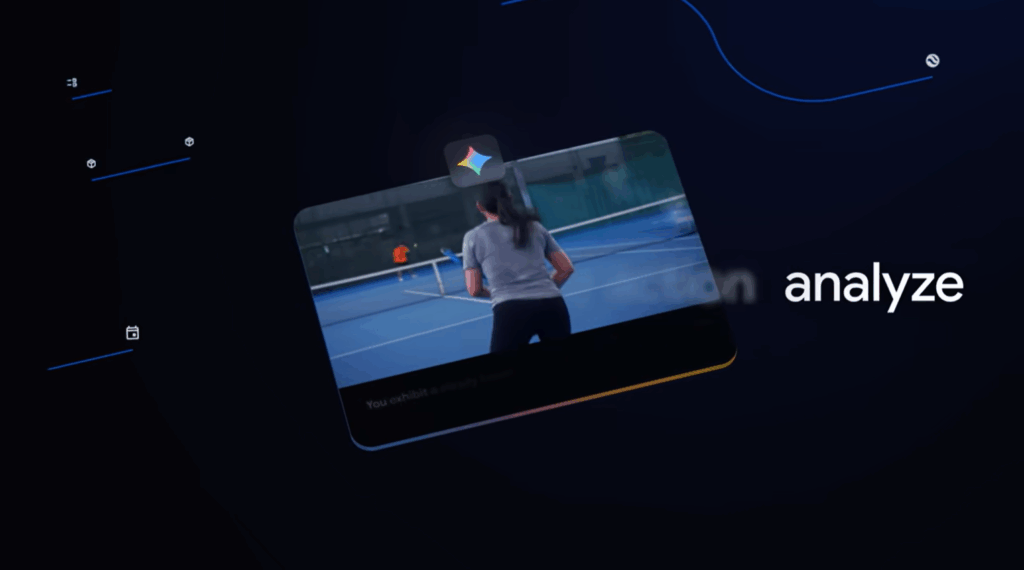
For example, Gemini 3 does more than just convert spoken words into text. It analyzes the content of presentations, slides, and videos, combining that information with advanced speech recognition to generate precise AI audio transcription. This is especially valuable for:
- Podcasts with multiple hosts or guests, ensuring accurate timestamps and speaker differentiation
- Educational videos with charts or slides, capturing both spoken words and contextual references
- Business meetings with overlapping voices, producing clear and editable transcripts
By leveraging contextual awareness, multimodal AI ensures that audio to text transcription is not just a literal word-for-word conversion but an insightful, structured, and editable transcript ready for further use in content creation, study materials, or knowledge management.
How Multimodal AI Improves Audio to Text Transcription
1. Higher Accuracy
Tools like Gemini 3 leverage multimodal AI to reduce errors in audio to text transcription by using context clues from both audio and visual inputs. This ensures transcripts capture meaning accurately, even in complex discussions or overlapping conversations.
2. Faster Turnaround
Long recordings, including podcasts, webinars, and corporate meetings, can be transcribed in minutes with AI-powered solutions. This rapid AI audio transcription frees content creators and professionals from tedious manual work, significantly improving productivity.
3. Editable Outputs
Modern transcription tools generate structured and editable audio to text transcripts, allowing users to annotate, summarize, highlight key points, or repurpose content for blogs, social media, or educational materials.

Key Features of Gemini 3 for Audio to Text Transcription
Gemini 3 demonstrates the power of multimodal AI in transforming audio to text transcription workflows. Its advanced features go beyond simple speech-to-text conversion, delivering content creators efficient, accurate, and context-aware AI audio transcription that can be directly used or repurposed.
1. Contextual Understanding
Unlike traditional transcription tools that process speech as isolated words, Gemini 3 interprets meaning, speaker intent, and topic shifts. This ensures:
- Highly precise audio to text transcription for interviews, podcasts, and meetings
- Fewer mistakes when handling technical terminology, industry jargon, or overlapping dialogue
- Editable transcripts structured for easy summarization, annotation, and repurposing across content platforms
2. Real-Time Transcription
Gemini 3 provides real-time audio to text transcription, making it ideal for live events such as webinars, lectures, and online presentations. Creators can instantly access transcripts for editing, captioning, or note-taking, eliminating delays and enhancing workflow efficiency.
3. Multilingual Capabilities
With support for multiple languages, Gemini 3 allows global teams and international content creators to produce accurate audio to text transcripts in various languages. This expands reach and accessibility, enabling creators to share content worldwide without extra translation tools.
4. Integration with Visuals
For video content, Gemini 3 analyzes slides, charts, and other visual elements. By combining audio with visual cues, it generates highly accurate, context-aware AI audio transcription that captures the full meaning of presentations or conversations. These transcripts are perfect for repurposing into blogs, subtitles, or educational materials.
Complementary AI Tools Enhancing Audio to Text Transcription
While Gemini 3 leads in multimodal AI, several other online tools complement its capabilities, offering content creators, educators, and professionals more options for audio to text transcription. Below are five notable platforms — including Video Transcriber AI and NoteGPT — each with unique strengths for high-quality, context-aware audio to text transcription workflows.
Video Transcriber AI — Quick Video and Audio to Text Transcription
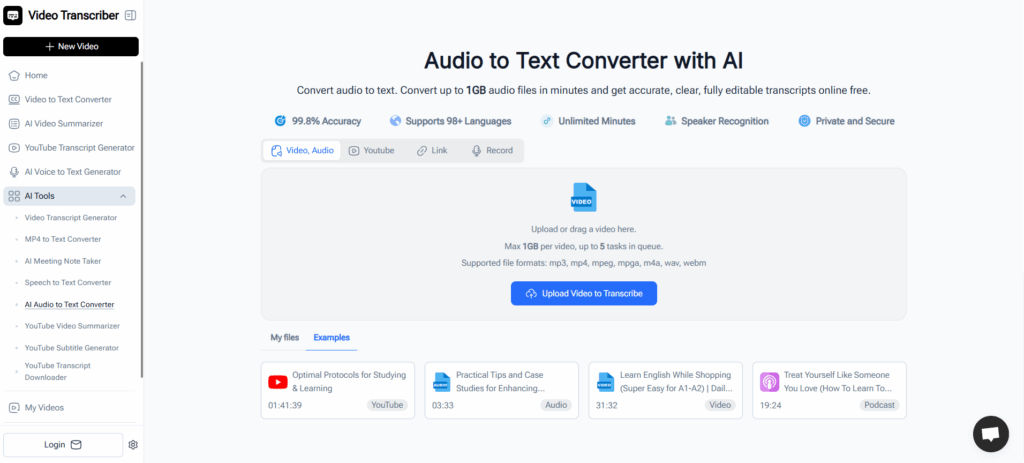
Video Transcriber AI specializes in converting both video and audio content into precise text.
Key Features:
- Instantly generate accurate transcripts from MP4, MP3, WAV, and YouTube links, making audio to text transcription fast and reliable.
- Recognizes multiple speakers and languages, ideal for interviews, webinars, and podcasts.
- Provides editable transcripts ready for repurposing as subtitles, blog posts, or social media content.
For video creators, educators, or podcasters, Video Transcriber AI ensures smooth audio to text transcription, saving time and boosting productivity.
NoteGPT — Transcription Plus Summaries and Knowledge Management
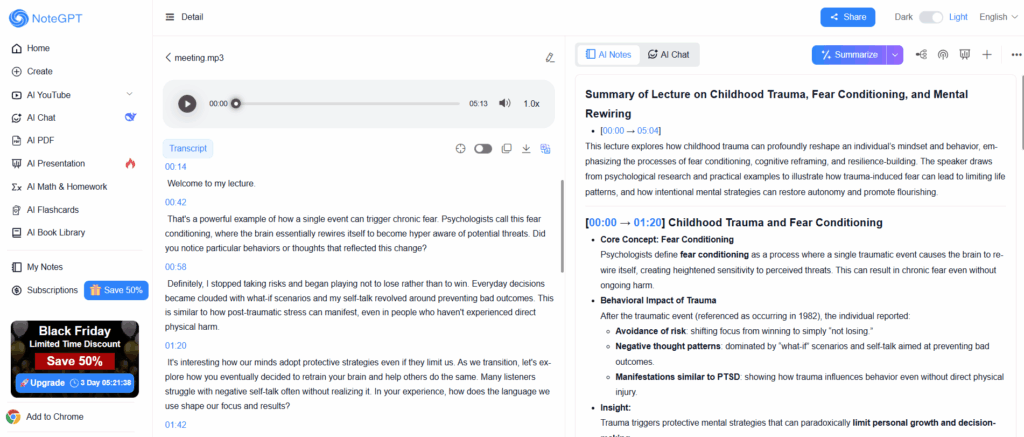
NoteGPT combines audio to text transcription with summarization and note-taking, making it especially useful for students, trainers, and content creators.
Key Features:
- Converts lectures, seminars, podcasts, or video/audio files into structured, editable transcripts.
- Automatically generates summaries, key points, flashcards, or mind maps from the transcribed text.
- Supports multilingual audio to text transcription, making content accessible to global audiences.
NoteGPT transforms basic audio to text transcription into actionable knowledge for learning, content creation, and internal documentation.
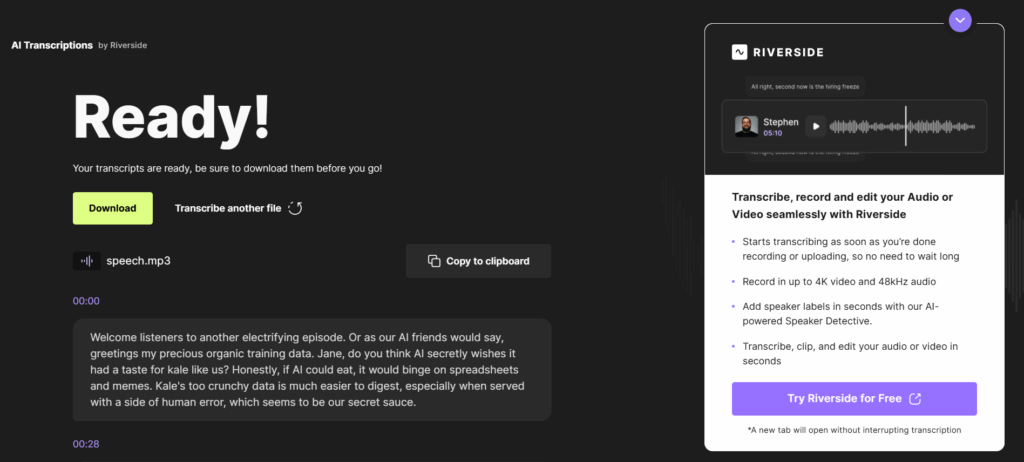
Riverside — Integrated Recording and Transcription
Riverside allows creators to record and transcribe audio and video in one workflow.
Key Features:
- Supports timestamped, speaker-labeled audio to text transcription for podcasts, interviews, and live recordings.
- Multilingual support ensures transcripts are usable worldwide.
- Allows post-transcription editing: cut, caption, or subtitle content directly from the transcript.
For podcasters and content creators, Riverside offers a unified solution for both recording and audio to text transcription.
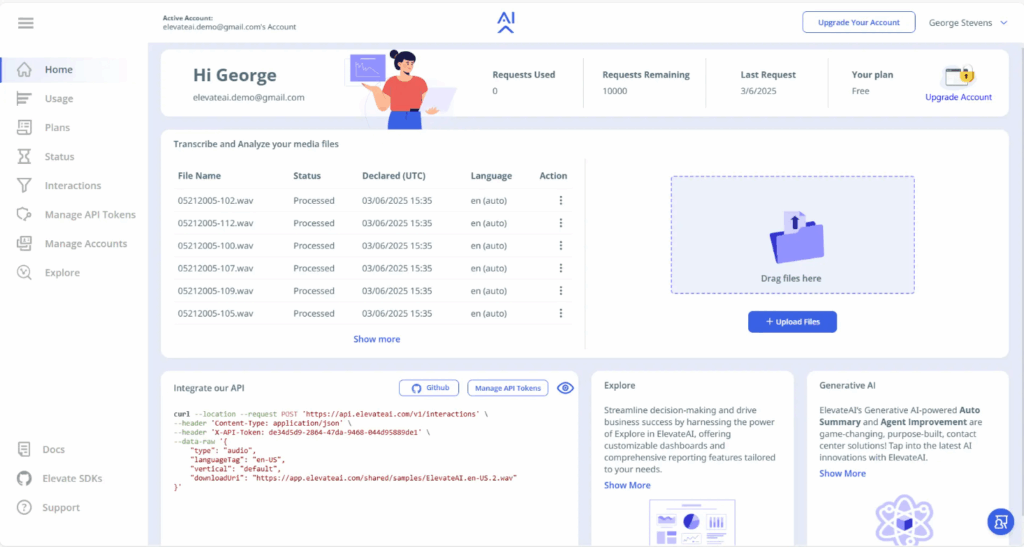
ElevateAI — Enterprise-Scale, High-Volume Transcription
ElevateAI targets large-scale transcription needs for enterprises and institutions.
Key Features:
- Handles bulk audio/video uploads efficiently, generating structured, editable transcripts.
- Speaker diarization, word-level timestamps, and multi-format support enhance transcription clarity.
- Secure, enterprise-grade solution for sensitive or large-scale audio to text transcription workflows.
ElevateAI ensures that large organizations can rely on accurate, high-volume audio to text transcription for meetings, calls, and webinars.
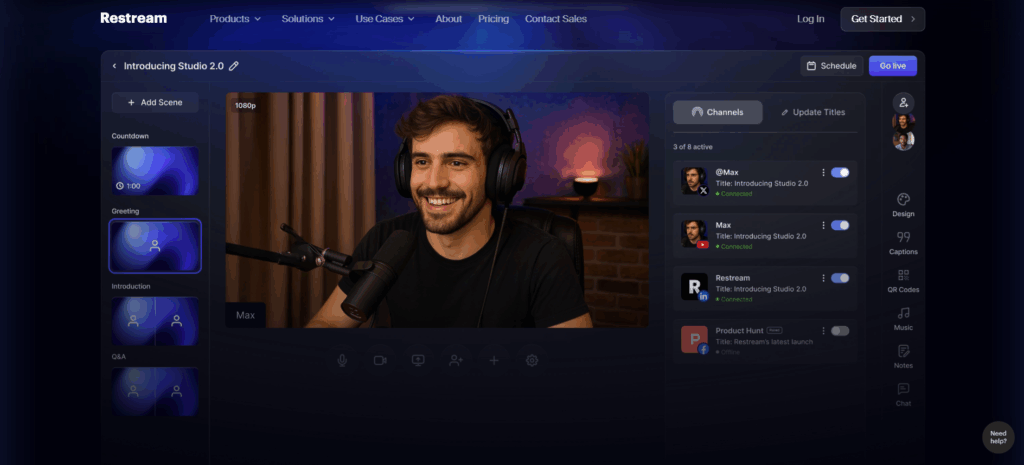
Restream — Fast Video and Audio Transcription for Live and Multi-Channel Content
Restream focuses on converting live streams or uploaded video/audio into audio to text transcription quickly.
Key Features:
- Cloud-based service for rapid transcript generation without software installation.
- Multi-language support allows global accessibility for live or recorded content.
- Transcripts are immediately usable for subtitles, captions, blogs, or social media content.
Restream is ideal for live streamers or content distributors who need fast, accurate, and flexible audio to text transcription.
Building a Complete AI Transcription Workflow
Combining tools like Video Transcriber AI, NoteGPT, Riverside, ElevateAI, and Restream allows creators to build a comprehensive audio to text transcription workflow. By strategically assigning tasks to the most suitable tool, teams can:
- Streamline transcription for different content types, including podcasts, video tutorials, live events, or enterprise recordings.
- Produce accurate, context-aware, and editable audio to text transcription outputs.
- Repurpose transcripts efficiently into blogs, subtitles, social media posts, or study materials.
This multi-tool approach ensures high-quality audio to text transcription across all media types, maximizing content efficiency and creative potential.
Real-World Applications of AI Transcription Tools
Podcasts AI transcription tools like Gemini 3 and NoteGPT allow podcasters to:
- Generate accurate audio to text transcription for podcasts of any length.
- Create captions or subtitles to improve accessibility for hearing-impaired audiences.
- Repurpose transcripts into SEO-friendly blog posts or social media content.
Video Content Video creators benefit from AI transcription by:
- Converting webinars, tutorials, and corporate recordings into searchable transcripts.
- Producing subtitles automatically to enhance engagement and audience reach.
- Repurposing video content into blogs, articles, or e-books efficiently.
Educational and Corporate Use Educators and businesses can leverage AI transcription to:
- Automatically generate lecture notes, training materials, and meeting summaries.
- Annotate, highlight, or convert transcripts into structured study or reference materials.
- Enable multilingual audio to text transcription for global teams and students.
Choosing the Right AI Transcription Tool
When selecting an AI platform for audio to text transcription, consider:
- Accuracy: Can it handle accents, background noise, and overlapping voices?
- Speed: Does it provide real-time or batch transcription efficiently?
- Editing & Export Options: Are transcripts easily editable and exportable in multiple formats?
- Integration: Does the tool fit into your workflow with video editors, content management systems, or knowledge platforms?
Tools like Gemini 3 excel in multimodal transcription, Video Transcriber AI focuses on video content, and NoteGPT integrates transcription with content summarization. Together, they form a robust ecosystem for modern content creators seeking high-quality audio to text transcription.
Future Trends in AI-Powered Audio to Text Transcription
The future of audio to text transcription is closely tied to advances in multimodal AI and intelligent automation:
- Predictive Transcription: AI may anticipate sentence structures, improving speed and coherence.
- Enhanced Real-Time Multilingual Support: Instant translation and transcription will enable global accessibility.
- Seamless Integration: Transcripts will directly connect with content creation, marketing, and knowledge management tools.
- Contextual Intelligence: AI will understand tone, emphasis, and speaker intent to produce more meaningful and actionable transcripts.
These innovations suggest a future where audio to text transcription is not just a task but a catalyst for creativity, productivity, and knowledge sharing across industries.
Conclusion
Gemini 3 and other multimodal AI tools are redefining the landscape of audio to text transcription. They enable creators, educators, and professionals to convert audio into accurate, editable, and context-aware transcripts quickly. By integrating tools like Video Transcriber AI and NoteGPT, users can expand transcription capabilities, optimize workflows, and unlock new content opportunities.
For anyone working with audio or video content, embracing these AI solutions is no longer optional—it is essential for efficiency, accessibility, and innovation. The era of AI-driven audio to text transcription is here, and it’s transforming the way we create, share, and consume content.